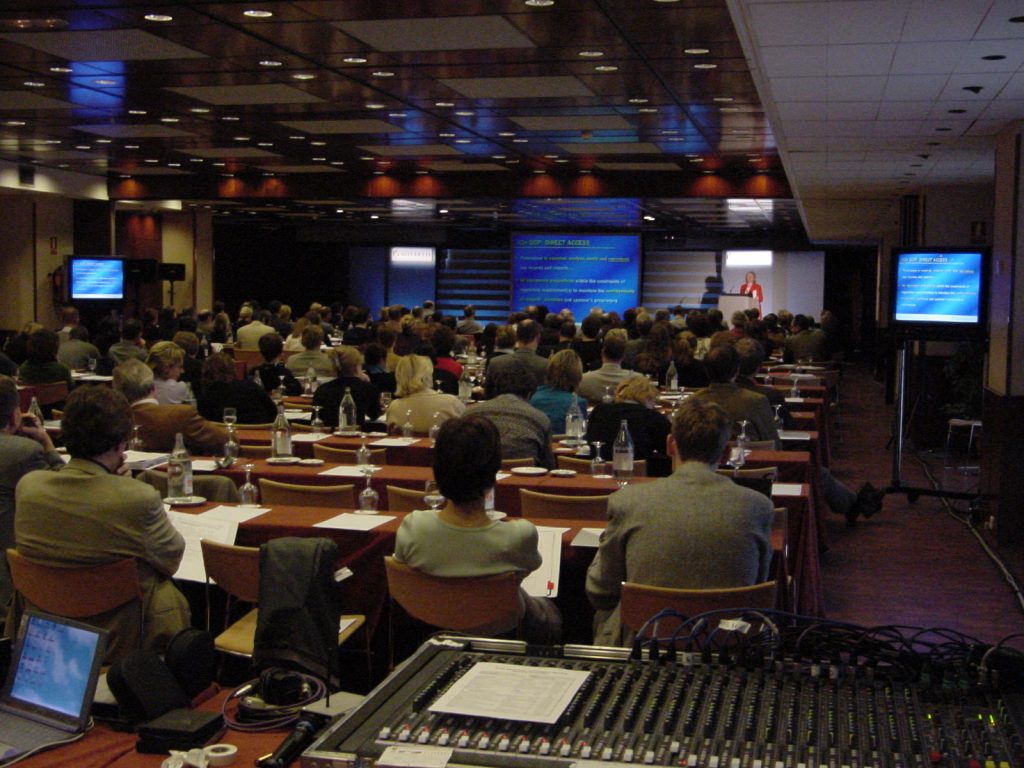
Long before AI became part of the event industry conversation, I was working on international investigator meetings for pharmaceutical clinical trials.
These were not ordinary conferences.
Investigator meetings bring together principal investigators, clinical research coordinators, sponsor teams, medical personnel and others involved in the delivery of a clinical trial. Their purpose is to make sure participating sites understand the study protocol, operational procedures, safety requirements, reporting processes and the practical details needed to run the trial correctly.
That creates a very particular kind of event-management environment.
The information is complex.
The audience is highly specialised.
The material may be confidential.
Requirements can change.
And accuracy matters.
My role was as Technical Project Manager, responsible for the audiovisual and technical delivery of these meetings.
That meant taking the client brief, specifying the projection, sound, lighting, video, recording and staging requirements, obtaining and monitoring costs, liaising with AV suppliers, dealing with special requests and then managing the installation and technical operation onsite.
In many cases, I was also mixing the sound during the event itself.
The work took me across the UK, Europe and further afield, supporting meetings where medical and scientific information had to be communicated clearly and reliably.
More Than AV
One of the lessons I learnt very early is that technical event management is not really about equipment.
It is about information.
The equipment is simply the mechanism used to deliver that information.
A projector can be working perfectly, but if the wrong presentation is being shown, the event has a problem.
A sound system can be technically excellent, but if the audience cannot understand a critical explanation, the event has a problem.
A production team can have all the right equipment onsite, but if the latest change has not been communicated to the right people, the event still has a problem.
That is why good event project management depends so heavily on communication, checking, version control and human judgement.
Those same principles are becoming even more important as AI enters the event-management workflow.
AI Can Work Quickly — But That Is Not the Same as Being Right
Today, an event project manager can ask an AI system to analyse a brief, create a schedule, summarise meeting notes, draft supplier instructions, identify possible risks or prepare a production checklist in seconds.
That is extraordinarily useful.
But speed can create its own danger.
An AI-generated answer can look polished, structured and completely convincing while still containing an incorrect assumption, missing an important detail or misunderstanding the context.
Anyone who has worked on events involving sensitive or highly controlled information should immediately recognise the problem.
The output still has to be checked.
The project manager is still responsible for understanding what the client actually requires.
The correct version still has to reach the correct person.
And somebody still has to decide whether the proposed solution will actually work in the real world.
Accuracy Is a Project-Management Discipline
Clinical trial meetings reinforced something that applies to almost every type of professional event:
Accuracy does not happen automatically.
It is created by process.
Briefs are checked.
Changes are confirmed.
Documents are updated.
Responsibilities are assigned.
Technical requirements are tested.
Information is verified.
The same discipline should be applied to AI.
For example, suppose an AI system produces a technical schedule from an event brief.
It may save the project manager a considerable amount of time.
But the project manager still needs to ask:
Does the schedule reflect the actual access time?
Has enough time been allowed for the AV installation?
Has the venue imposed any restrictions?
Are the suppliers working from the same timings?
Has the client approved the latest running order?
Is there enough contingency?
AI can help build the schedule.
It cannot remove the responsibility for checking whether that schedule is workable.
Confidentiality Matters Too
Pharmaceutical meetings also involved information that could not simply be treated casually.
That same lesson applies strongly to AI.
Event managers routinely work with confidential client information, delegate data, budgets, contracts, supplier pricing, internal business plans and sometimes commercially or legally sensitive material.
Before putting information into an AI system, the project manager needs to understand what information is appropriate to share and what should remain protected.
Responsible AI use is therefore not an additional technical skill sitting separately from event management.
It is part of professional project management.
Version Control Has Not Disappeared
Another familiar problem in events is the phrase:
“Which is the latest version?”
Anyone who has managed presentations, running orders, rooming lists, production schedules or client documents will know exactly how quickly multiple versions can start circulating.
AI does not make that problem disappear.
In some situations, it can make it worse because new material can now be generated so quickly.
A project team may suddenly have several AI-generated versions of a document, each slightly different.
The solution is the same one experienced project managers have always used:
Clear ownership.
Clear naming.
Clear approval.
Clear distribution.
AI may produce the content faster, but good project controls still determine which version becomes the working document.
Human Judgement Remains Central
There is another important lesson from technical event production.
A plan rarely survives an event completely unchanged.
A speaker arrives late.
A presentation changes.
A piece of equipment fails.
The client asks for something unexpected.
The venue imposes a restriction nobody anticipated.
The running order moves.
Experienced event professionals deal with these situations by combining technical knowledge, communication and judgement.
AI can help explore options.
It can suggest alternatives.
It can rapidly rewrite schedules or communications.
But the decision about what to do still belongs to the people responsible for delivering the event.
That is particularly important onsite, where decisions often have to take account of factors an AI system cannot see.
AI Should Strengthen Good Project Management
I do not believe event professionals need to abandon the methods that have worked for decades simply because AI has arrived.
The opposite is true.
The people who will get the greatest value from AI are likely to be those who already understand good project-management practice.
They know how to write a proper brief.
They know which questions need asking.
They know where risks normally appear.
They know what suppliers need to know.
They know the difference between a theoretical solution and something that will actually work onsite.
AI can make many of those processes faster.
It can help turn information into action more efficiently.
But it works best when it sits inside a well-managed project.
The Technology Changes — The Responsibility Does Not
The technology used to deliver events has changed enormously during my career.
Projection changed.
Sound systems changed.
Lighting changed.
Video changed.
Communications changed.
And now artificial intelligence is changing the way we plan and manage projects.
But some things have not changed.
The client still expects the event to work.
The audience still expects clear communication.
Suppliers still need accurate information.
Budgets still need controlling.
Risks still need managing.
Changes still need communicating.
And the event project manager still carries the responsibility for bringing everything together.
That is the approach I take to AI for event project management.
Not AI replacing the project manager.
Not AI making decisions without supervision.
And not AI being used simply because it is fashionable.
Instead:
AI used as a practical project-management assistant, guided by professional experience, checked by human judgement and focused on helping us plan, manage and deliver better events.
Advertisement
Affiliate link: Discover The Cumberland Hotel — elegant stays at the heart of London.