About Nigel T. Heffer
European Conference Experience shaped my working life for more than 35 years, from early 35mm slide projector shows to modern European conferences, live events, technical production, sound engineering, and high-pressure corporate productions.
Early Foundations in Events
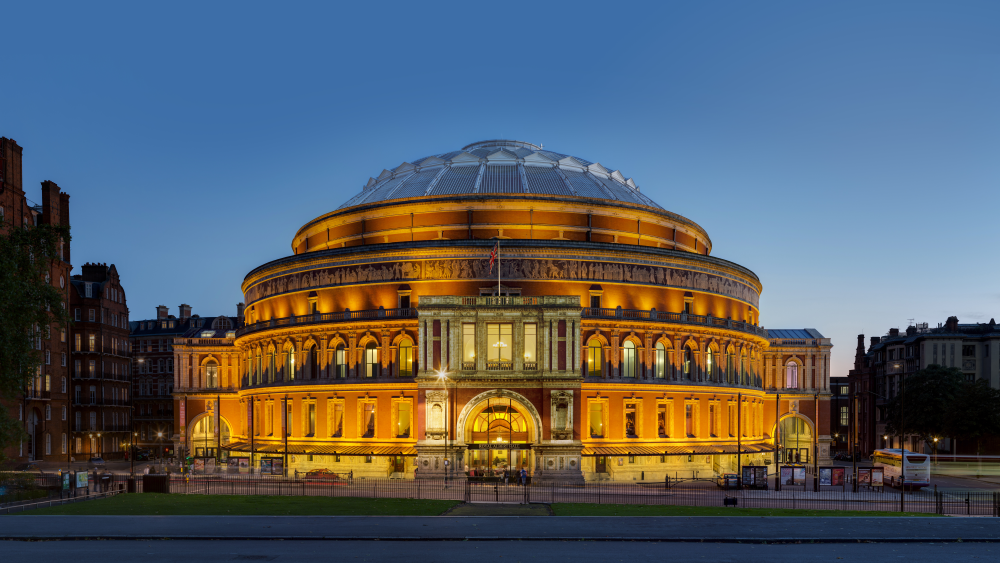
My introduction to live events began in childhood. From the mid-1960s through to the early 1970s, I helped my father with film screenings and music events at our church in Clapham, South London. He was also involved with Easter events at the Royal Albert Hall, where I began assisting from around the age of nine or ten.
These early experiences gave me a first-hand understanding of the preparation, practical work and teamwork required behind the scenes. Long before I understood the technical or organisational side of the events industry, I was already learning that successful productions depended on careful planning, cooperation and attention to detail.
An Early Milestone in Live Events
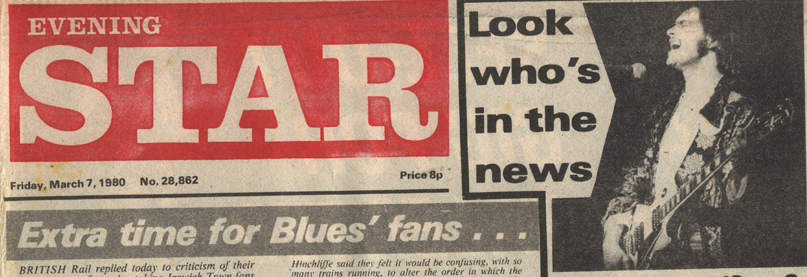
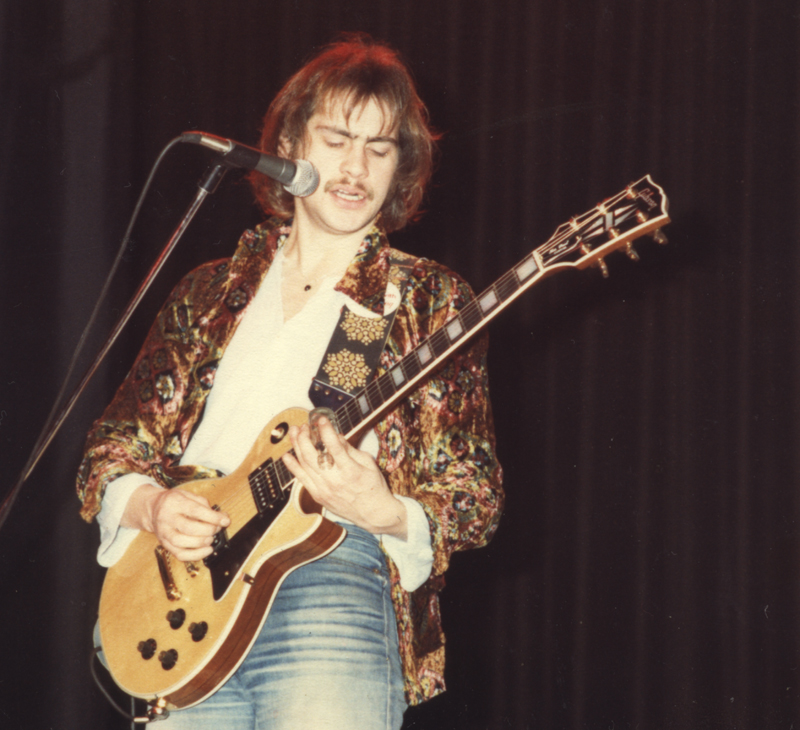
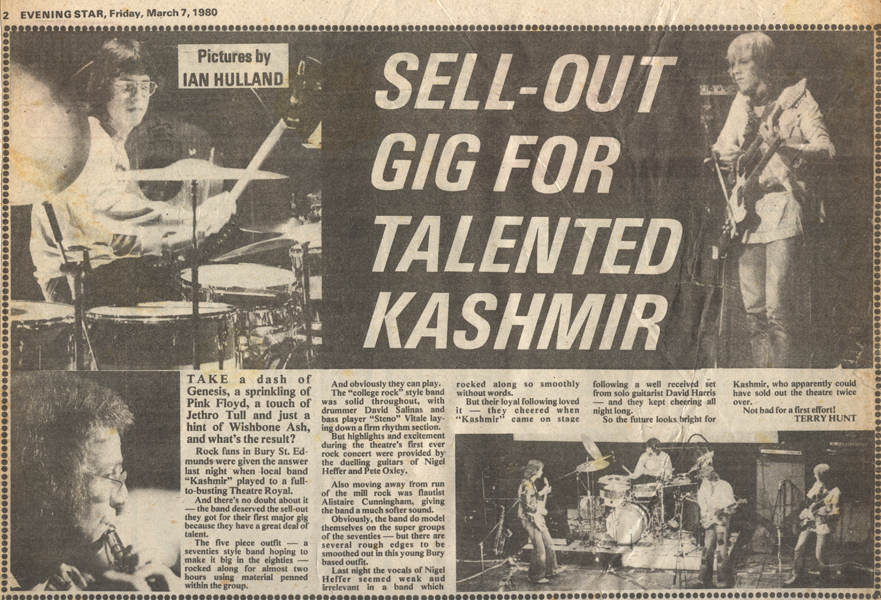
During the 1970s, I went on to organise music and band events at school. My first major professional-style event came in 1980, when I was 20 years old. I performed with the band Kashmir at the Theatre Royal in Bury St Edmunds, Suffolk. It was the first time a ‘Progressive Rock’ band had performed at the theatre.
That event was an important early milestone in a career that would later span international conferences, audiovisual production, sound engineering, technical management and live events across Europe.
35mm Slide Projectors
My first major conference production was in 1989, long before laptops, PowerPoint presentations, and digital projection became standard in the events industry.
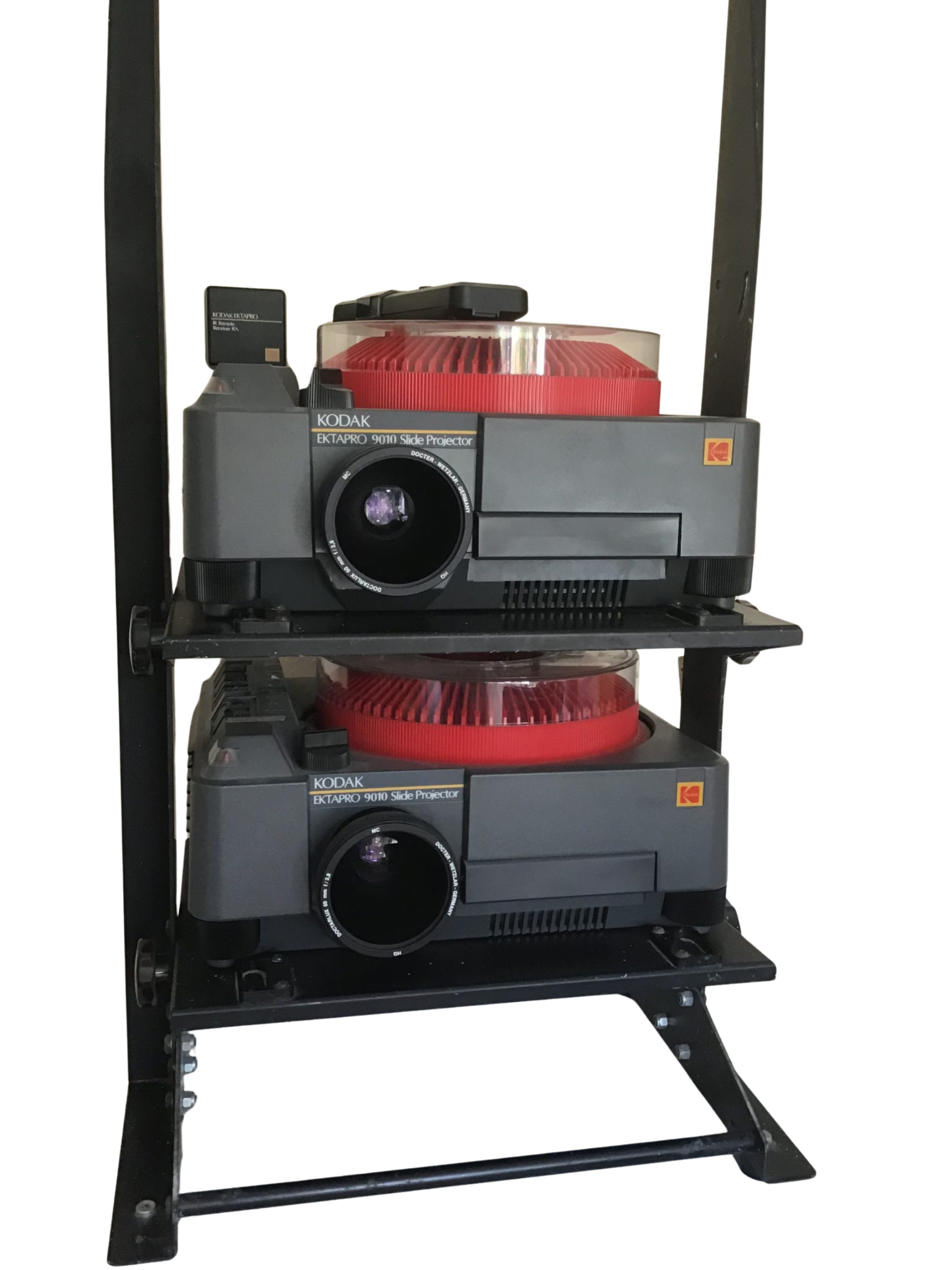
Back then, conference presentations were built using 35mm slide projectors, often stacked in pairs and programmed to create smooth dissolve transitions between slides during live productions.
Every image had to be photographed onto film, developed, loaded into carousel trays, carefully sequenced, and synchronised manually through show-control systems. If something went wrong, there was no quick software update or backup laptop waiting backstage.
You solved problems in real time.
Protecting the Slides
Presenters often arrived with 35mm slides mounted in simple cardboard frames. Those were perfectly adequate for the relatively low-powered projectors used in university lecture halls.
Large conference halls were different.
The high-output projectors we used generated far more heat, and ordinary cardboard mounts could distort or even damage the slide. Before the presentation, we would therefore check the slides and, where necessary, transfer them into professional Wess mounts made from heat-resistant materials with precision cover glass.
The speaker might never know any of this had happened.
That was the point.
Good technical production often means solving the problem before the presenter or the audience knows there was one.
Producing Video Before Digital Editing
Creating a video of a presentation was also very different.
We would run a twin-projector dissolve system, project the complete slide presentation onto a screen, play the prerecorded narration and record the entire programme in real time with a video camera.
Every slide cue had to be correct.
If someone missed an important cue, there was no timeline to drag backwards and fix later. In some cases, the recording had to start again from the beginning.
Today, a presentation can be edited, rendered and exported digitally in a fraction of the time. Back then, producing the final programme could be almost as much of a live performance as delivering the conference itself.
Technicians today do not know how lucky they are!
Three-gun CTR projectors
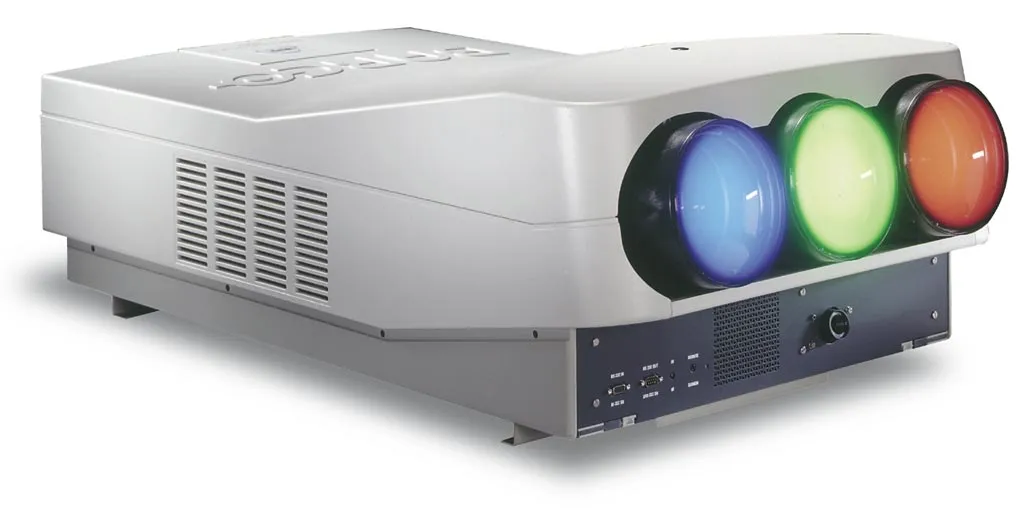
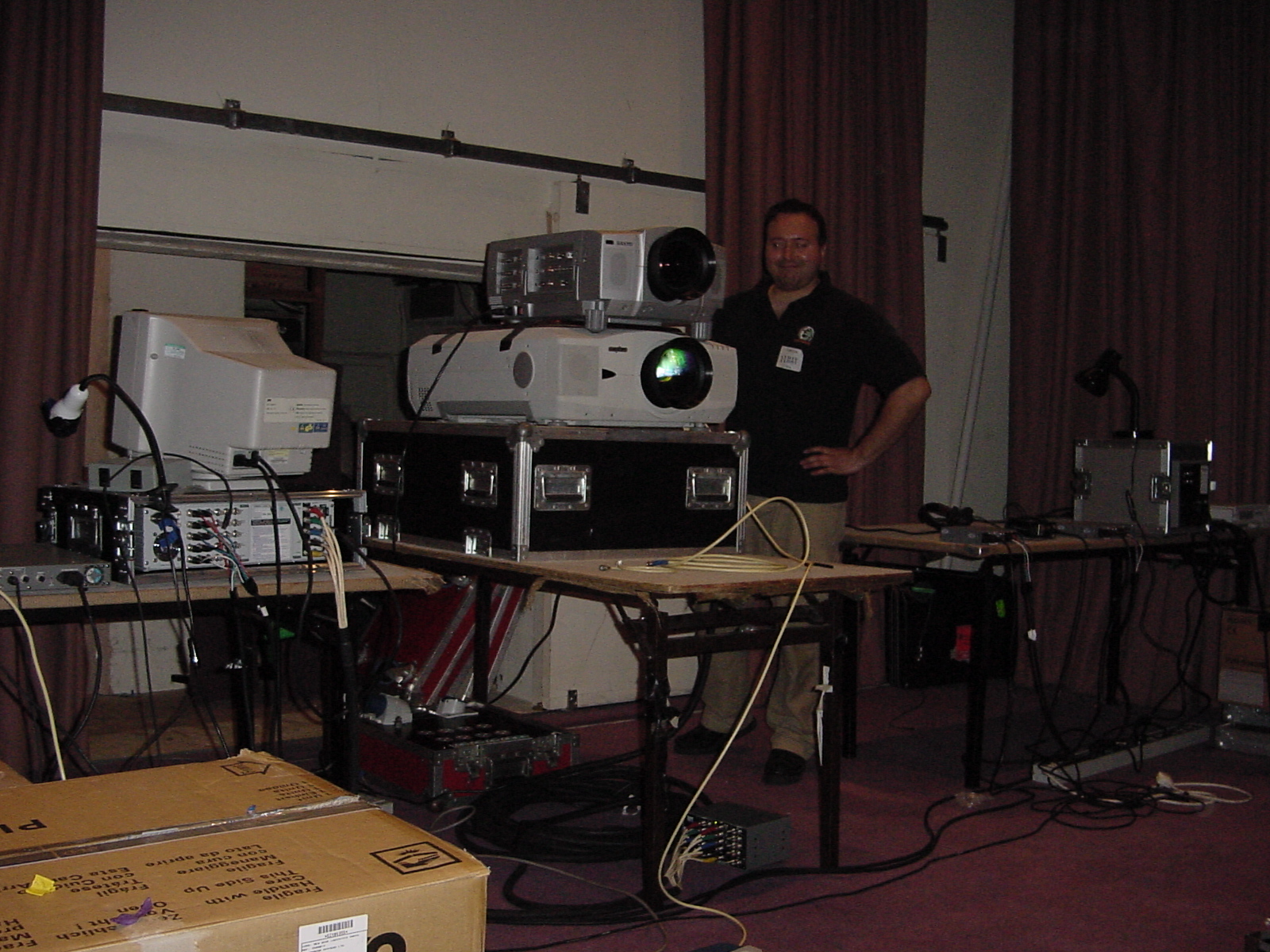
This was the BarcoGraphics 808s, one of the three-gun CRT projectors we used during the early years of large-format conference and event projection. Producing a clear picture involved far more than connecting a computer and switching on the projector.
The machine created its image through three separate red, green and blue picture tubes. Before an event, we displayed a test grid and carefully adjusted the geometry and convergence until the three colours lined up to produce clean white lines across the screen.
Even a small movement could disturb the alignment and leave coloured edges around text and graphics. Setting up the image demanded patience, a good eye and a detailed understanding of how the projector behaved.
It was also an extremely heavy piece of equipment. With its HD8 lenses fitted, the BarcoGraphics 808s weighed approximately 67 kilograms. Carrying it into venues, positioning it accurately and mounting it safely often required several technicians and proper lifting equipment.
Working with equipment like this taught me the value of preparation, precision and calm problem-solving. Those lessons remained important throughout more than 35 years of conferences, live events and technical production.
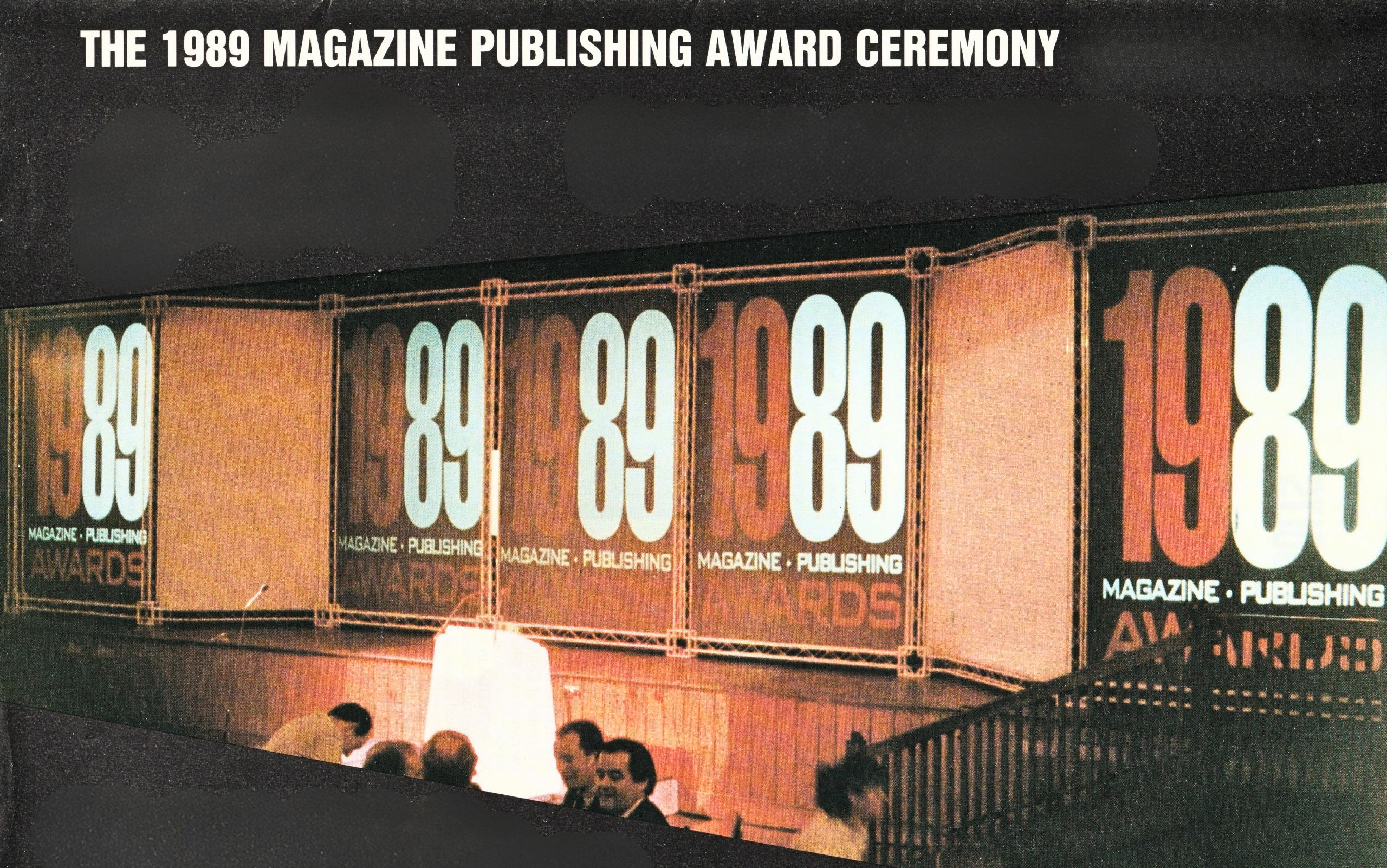
The 1989 Magazine Publishing Awards was one of the first large-scale productions I worked on professionally. The event used multiple 35mm Kodak carousel projectors running in A/B stacks to create large-format visual presentations across the stage long before modern digital screens became common in conferences.
Those productions required precision, preparation, timing, and technical coordination. Every cue mattered. Every slide change mattered. Every projector had to remain perfectly aligned throughout the show.
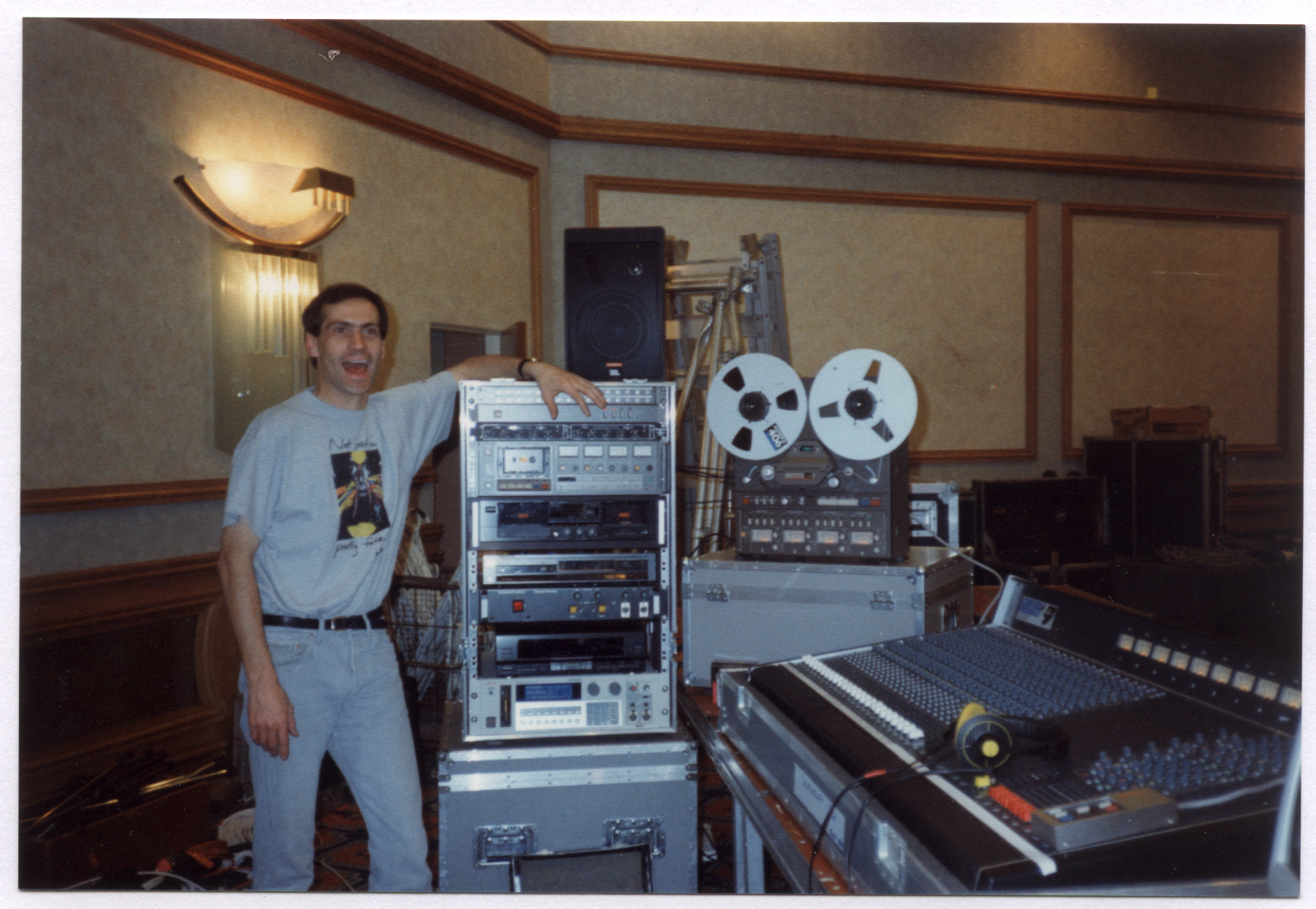
Backstage in the Early Days of Live Event Production
By the early 1990s, conference and live event technology was evolving rapidly, but the industry still operated very differently from the digital world we know today.
This photograph was taken backstage during the Beda Club of the Year Awards in 1993, where I worked as part of the live production and technical team. The awards were hosted by Jonathan Ross in 1993 and Noel Edmonds the following year.
At the time, there were no laptops running instant presentation software, no cloud backups, and no digital playback systems quietly waiting in the background if something failed. Everything relied on physical equipment, timing, preparation, and technical precision.
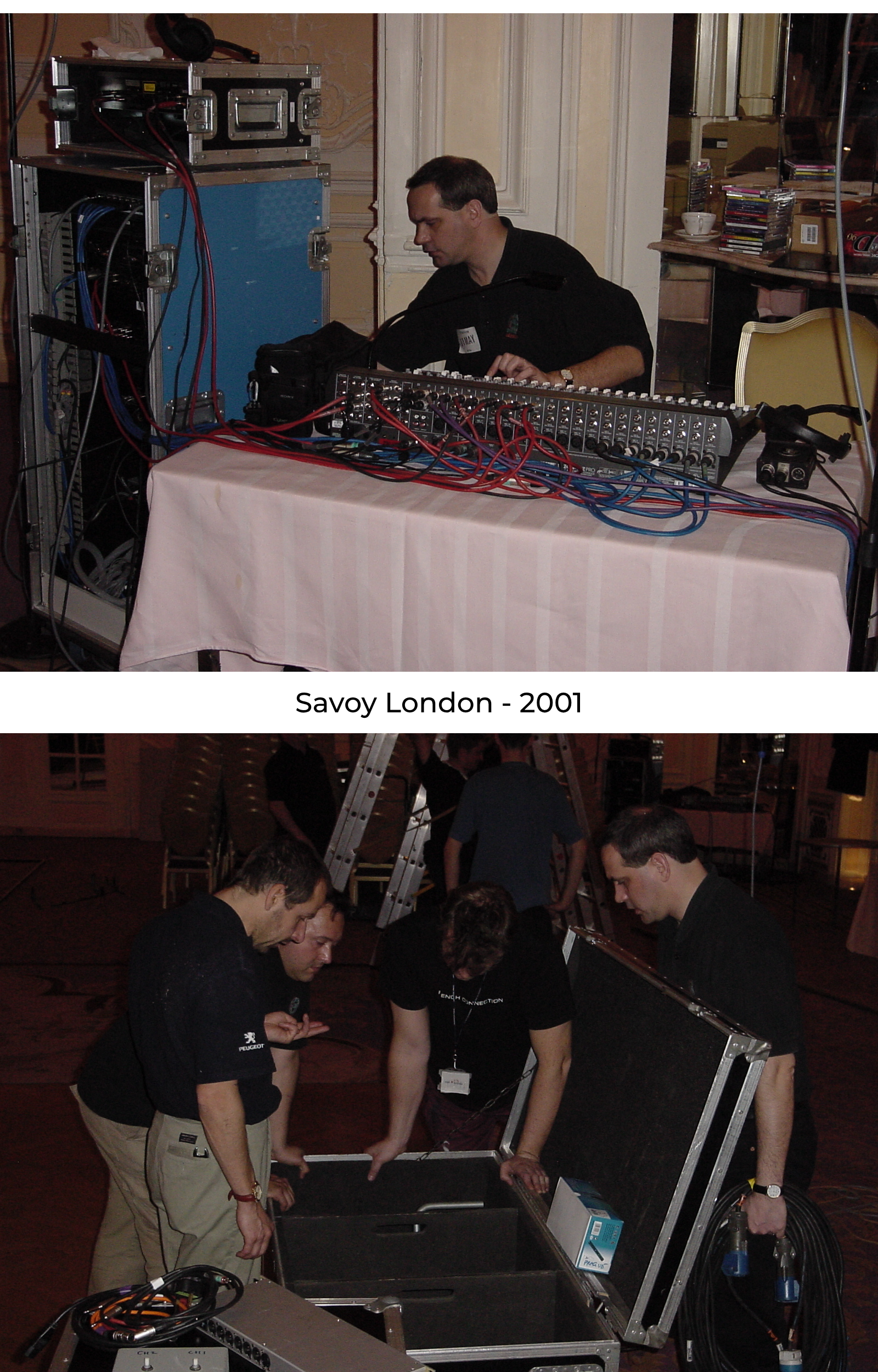
Behind the scenes, productions used large analogue audio consoles, reel-to-reel tape machines, playback racks, early samplers, and manually programmed show systems that required constant monitoring throughout the event. If a machine failed, there was no quick reboot. If a cue was missed, the audience noticed immediately.
Working in those environments taught me discipline very early in my career. You learned to think ahead, build redundancy wherever possible, and stay calm under pressure because live productions moved quickly and there was rarely time to recover from mistakes once the show began.
Those early years also gave me a deep appreciation for the crews working behind the scenes. Long before audiences arrived, teams would already be inside venues building stages, testing equipment, programming cues, running cable, checking audio systems, and solving dozens of technical problems nobody in the audience would ever know existed.
Over the decades, I watched the industry evolve from analogue projection systems and tape-based playback into fully digital conferences, hybrid events, streaming productions, and modern international corporate events across Europe. But despite all the technological changes, one thing never really changed: the pressure behind live events. Successful productions still depend on preparation, teamwork, communication, operational awareness, and the ability to solve problems quietly before they become visible to the audience. That backstage world fascinated me then, and it still fascinates me now.
Novartis Pharmaceuticals
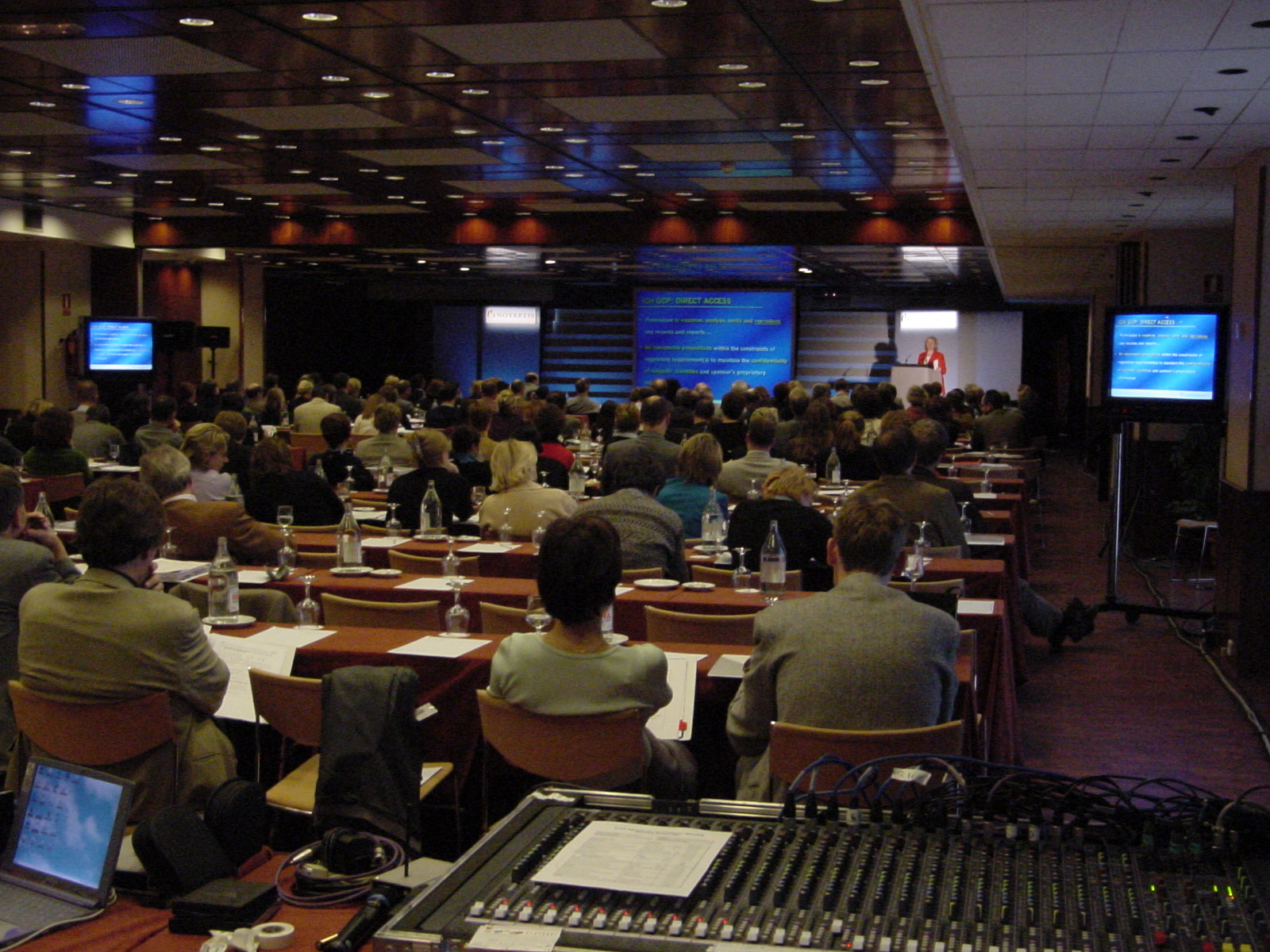
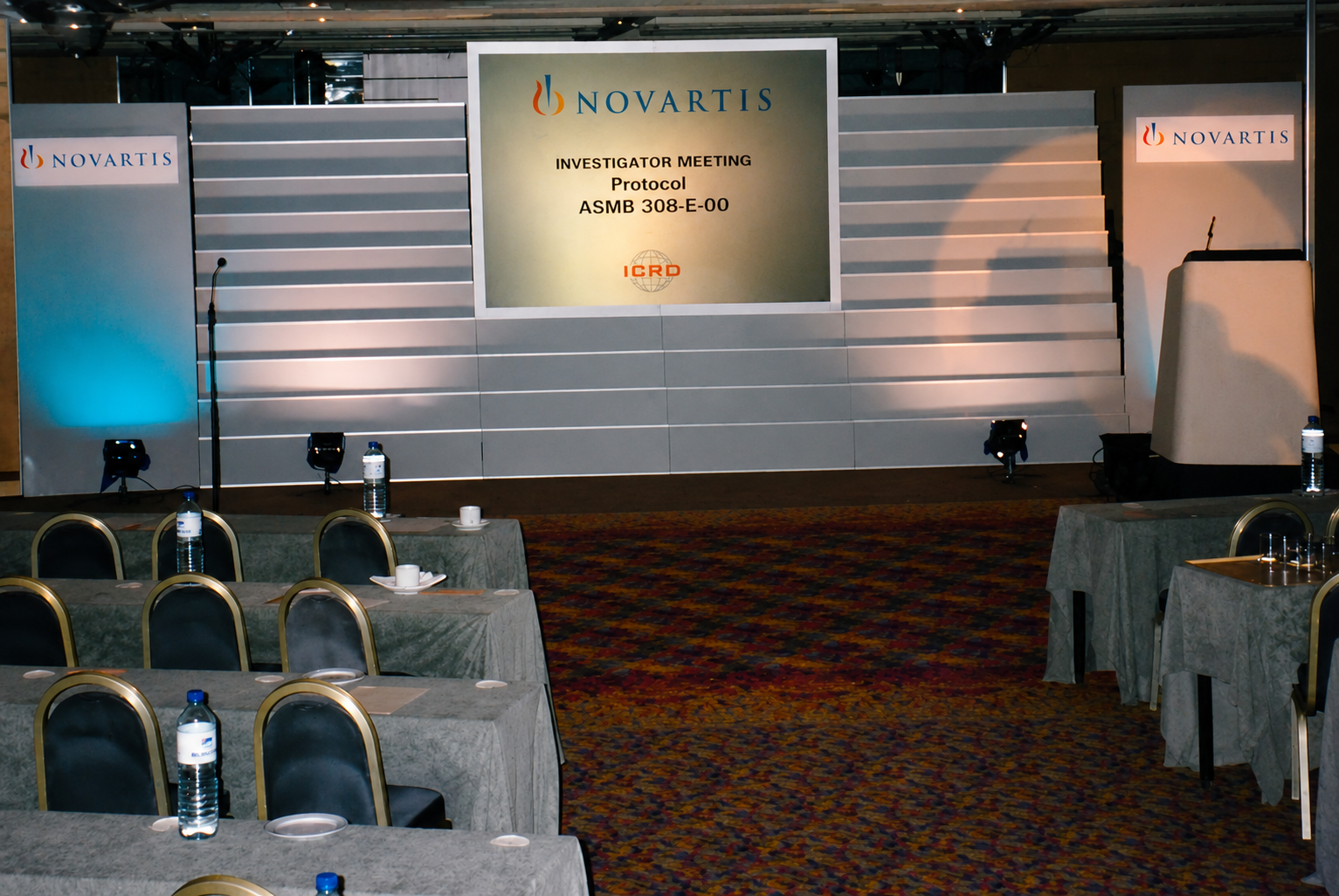
European Investigator Meetings
From 1997 through to 2003, I project-managed the technical requirements for more than 100 Novartis UK Investigator Meetings and workshops across Europe.
These specialist meetings brought together professors, doctors, clinical-trial monitors and Novartis representatives to present trial information, review progress, discuss procedures and support the next stages of each programme.
The meetings were held in five-star hotels and conference venues across Europe, from Stockholm to Nice. Although smaller than many large international conferences, they required careful planning, dependable technical delivery and consistent standards from venue to venue.
My role included taking the event brief, specifying the audiovisual requirements, coordinating with suppliers, monitoring costs, preparing presentation systems and managing the on-site technical delivery. These meetings reinforced one of the most important lessons of my career: small, specialist events often require just as much care, preparation and attention to detail as much larger productions.
Nigel and I worked together on various audio-visual projects for conferences for almost 12 years in the UK, Europe, Asia and North America. Nigel’s role was as a Technical Project Manager, looking after the AV aspects of many of my conferences.
Nigel’s role was multi-faceted — to take the brief and specify the video projection, audio, lighting, video capture of presentations and stage set required from the AV equipment supplier and provide costs for each event; to liaise with the AV supplier for any special requests and to monitor costs; and finally to be on-site to manage installation and to act as sound engineer.
Even Nigel’s musical skills were called on when he wrote music for conference stings!
Behind the Technical Delivery
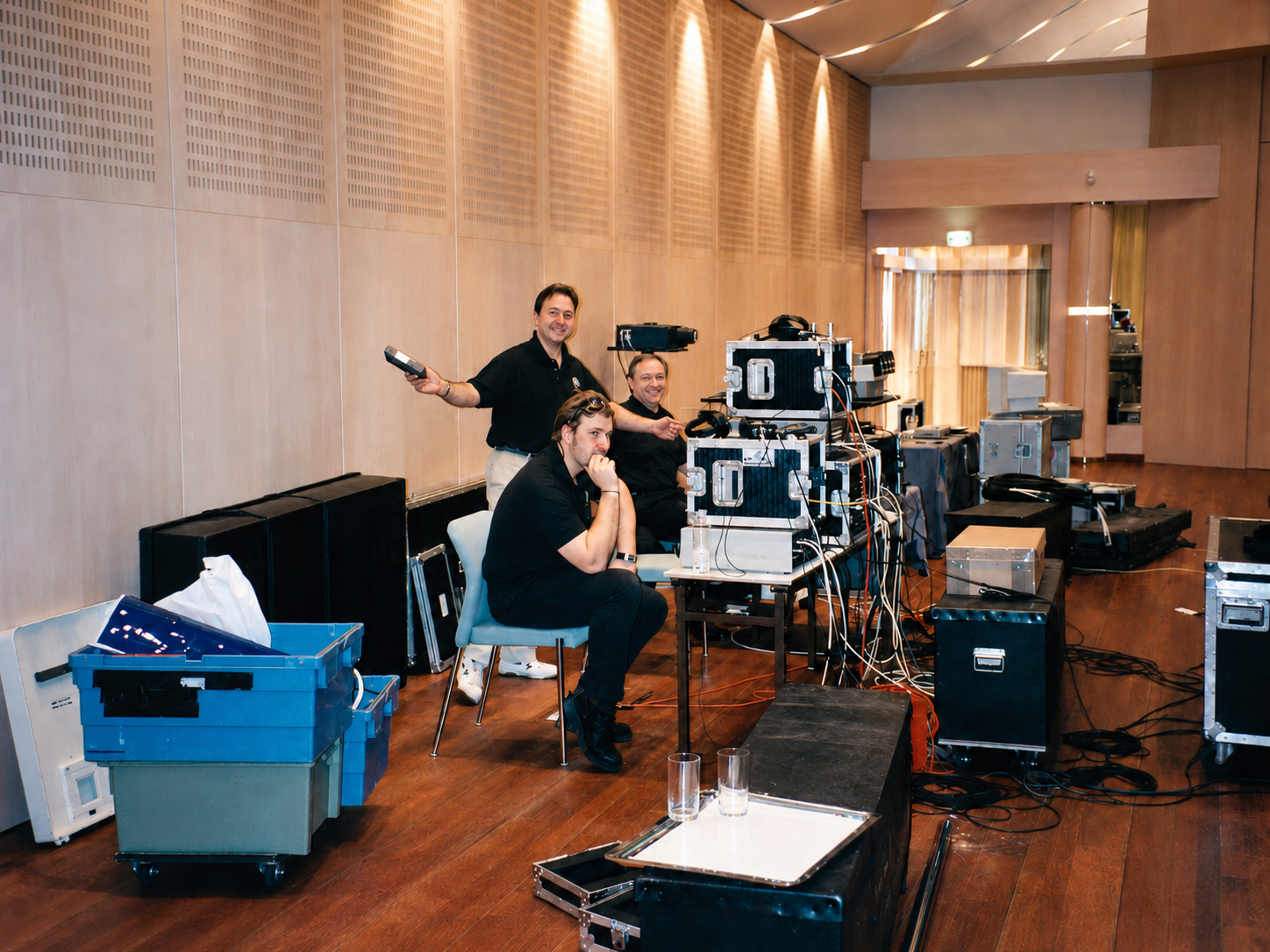
Preparing the Meeting Behind the Scenes
The finished conference room was only the visible part of each Novartis meeting. Behind the stage, the technical team worked with projection equipment, audio systems, presentation playback, lighting controls and extensive cabling to ensure that every session ran reliably.
My responsibility began well before the equipment arrived at the venue. I reviewed the event brief, specified the technical requirements, coordinated with audiovisual suppliers and checked that the proposed equipment, stage set and presentation systems were suitable for the room and programme.
On site, I managed the installation and worked with the technicians to test every element of the production. This included checking presentation sources, audio levels, microphones, projection alignment, lighting and any video-recording requirements.
Once the meeting began, I often worked as the sound engineer while continuing to oversee the wider technical operation. Presentations had to begin on time, speakers needed clear and dependable support, and any problem had to be resolved quickly and quietly.
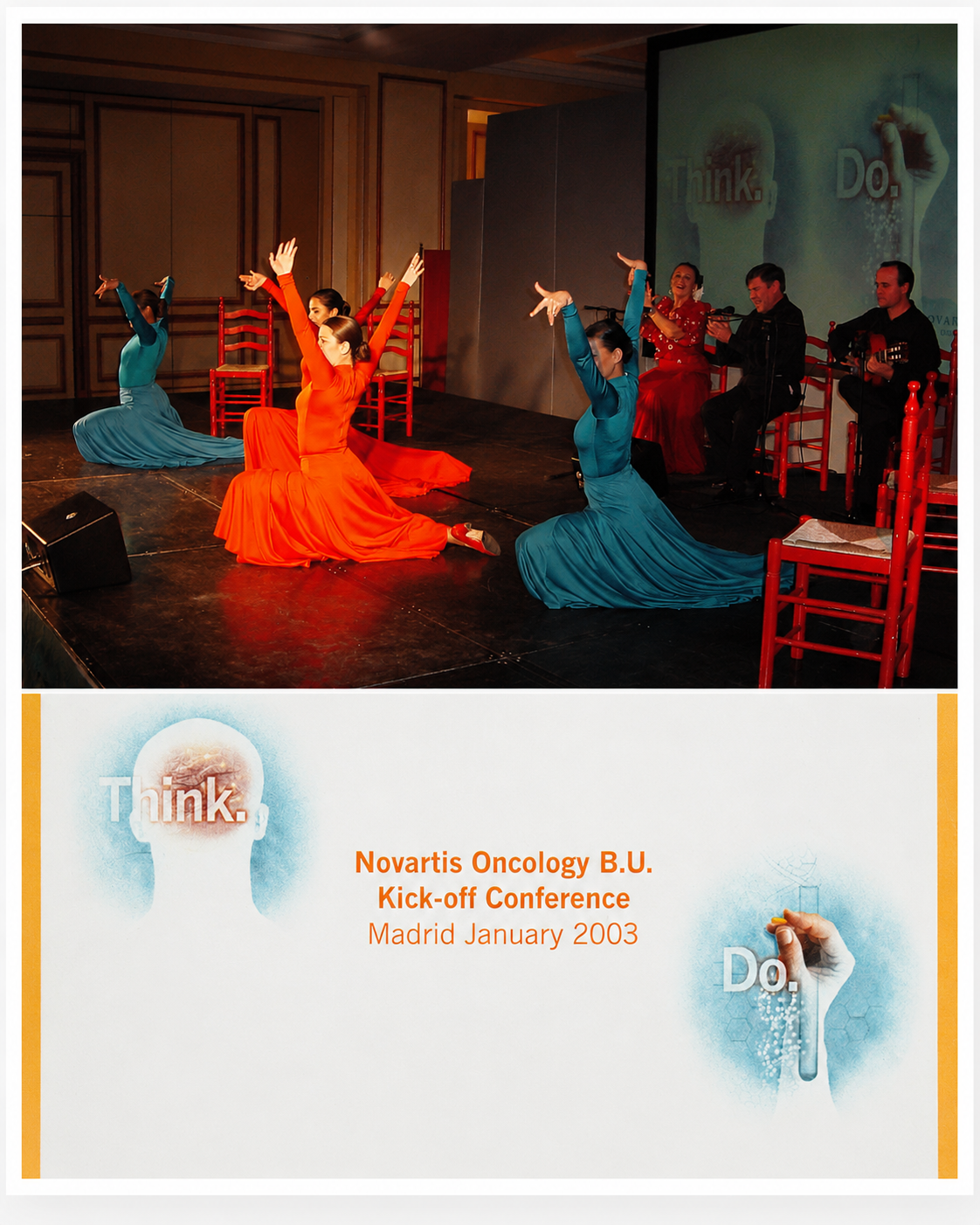
Some programmes also included evening entertainment and gala events. These required a different type of technical preparation, including stage lighting, performance audio, playback, artist requirements and careful integration with the conference production already installed in the venue.
Delivering more than 100 meetings across different European venues required consistency, even when the rooms, suppliers and local working conditions changed. The objective was always the same: to create a professional environment in which the medical and clinical teams could concentrate fully on the meeting.
Letters of Thanks from Novartis
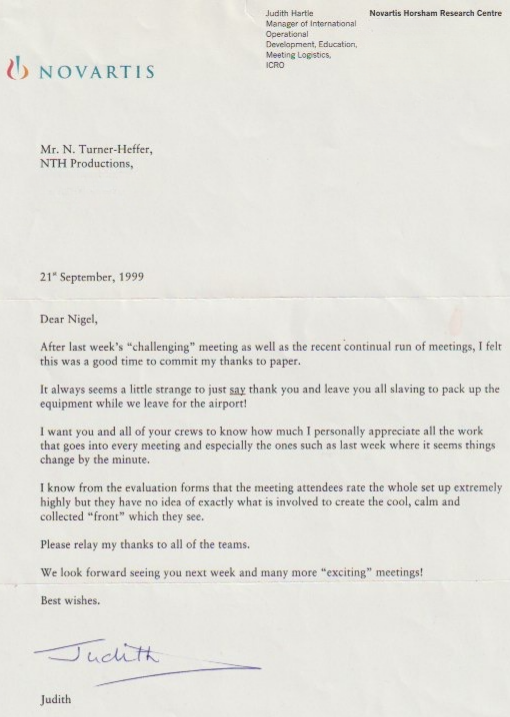
These letters from Judith Hartle at Novartis reflect the trust, continuity and professional relationships built through repeated clinical-trial meetings and workshops across Europe.
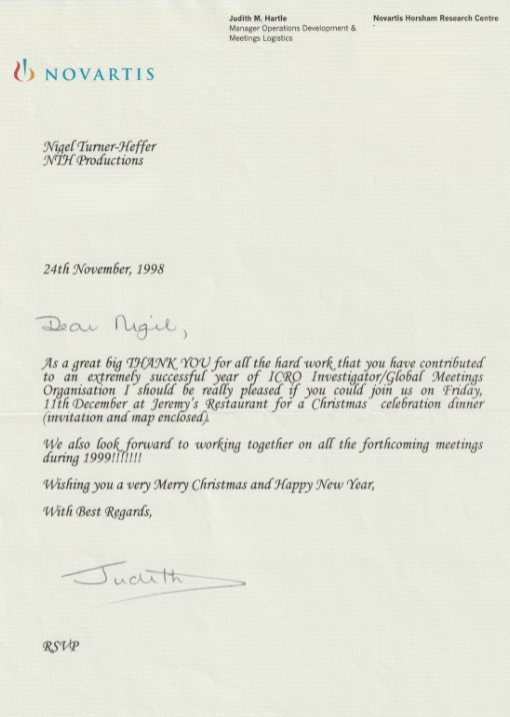
A Successful Year of Investigator Meetings
A great big thank you for all the hard work that you have contributed to an extremely successful year of investigator and global meetings.
The letter also looked ahead to continued work on the forthcoming programme of meetings during 1999. It is an important record of the long-term working relationship established through the consistent technical delivery of these events.
Judith M. Hartle
Manager, Operations Development and Meetings Logistics, Novartis
Recognising the Work Behind the Meeting
I want you and all of your crews to know how much I personally appreciate all the work that goes into every meeting, especially the ones where it seems things change by the minute.
Judith also noted that delegates rated the complete meeting setup extremely highly, while rarely seeing the preparation, coordination and technical work required to create the calm and professional environment in front of them.
Judith M. Hartle
International Operations Development, Education, Meeting Logistics and ICRO, Novartis
Investment Europe Fund Management Events
Fund Management Meetings Across Europe
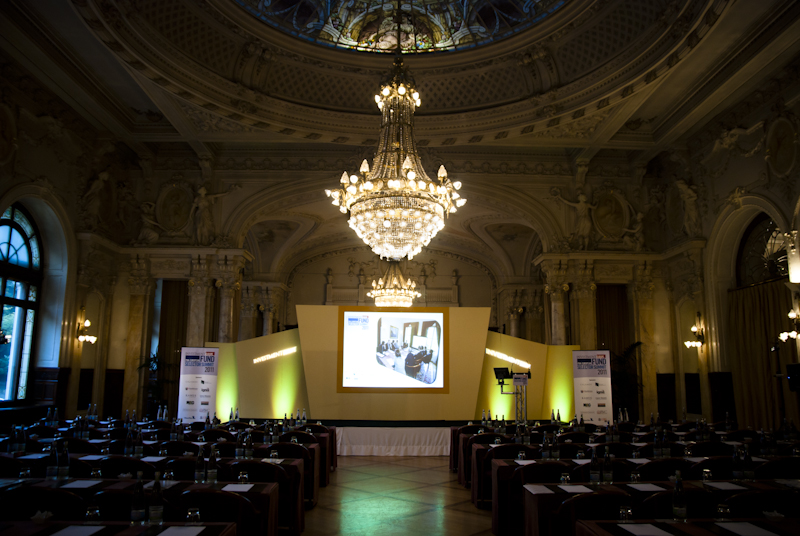
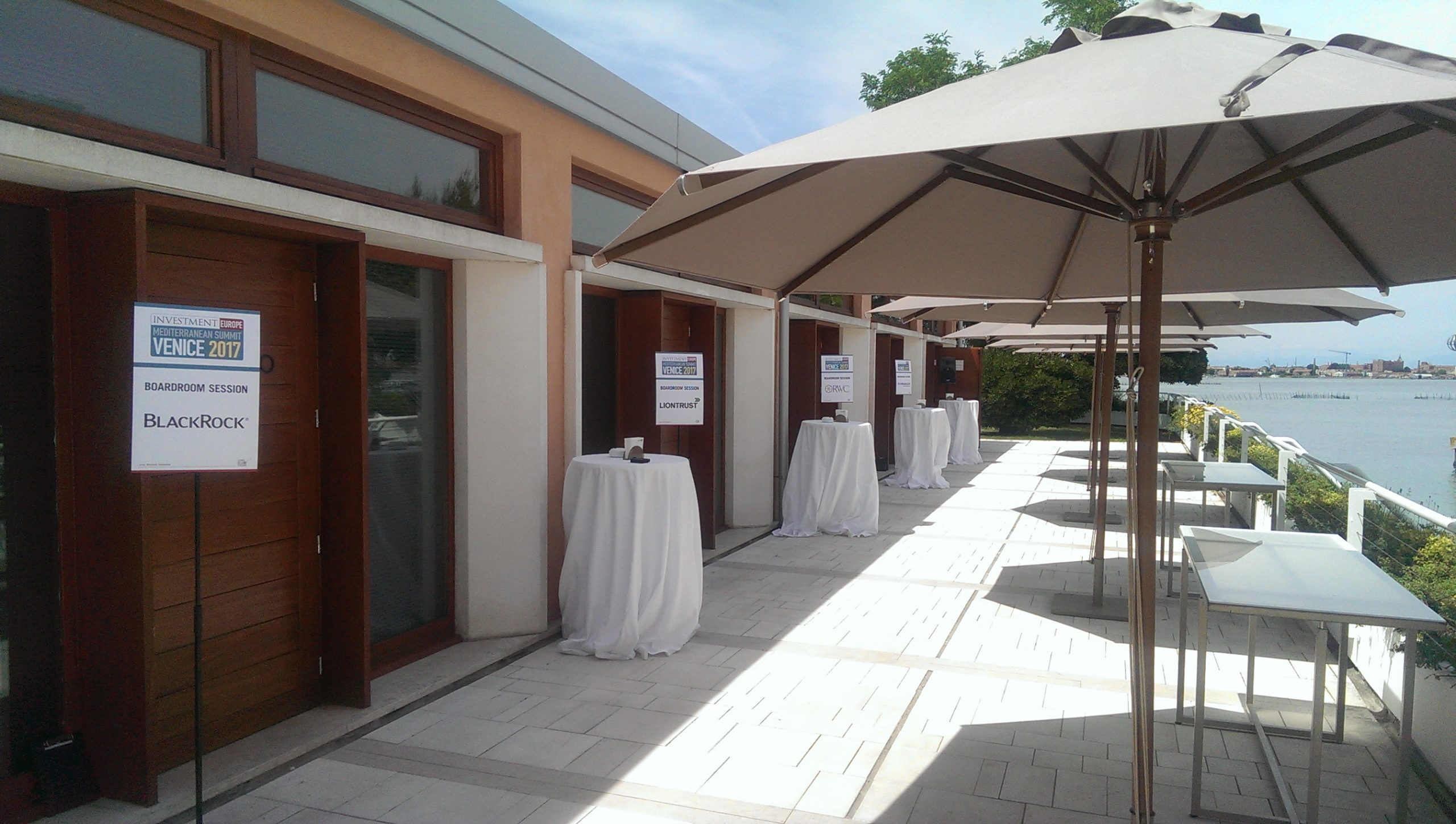
From 2010 through to 2020, I worked on Investment Europe fund management events produced by Open Door Media at hotels and conference venues across Europe.
These specialist meetings brought together fund managers, investment professionals, financial organisations and invited delegates for presentations, market discussions and professional networking.
The events required a professional but discreet technical environment. Presentations needed to be displayed clearly, speakers had to be heard throughout the room, and each session had to move smoothly without the technology distracting from the financial content.
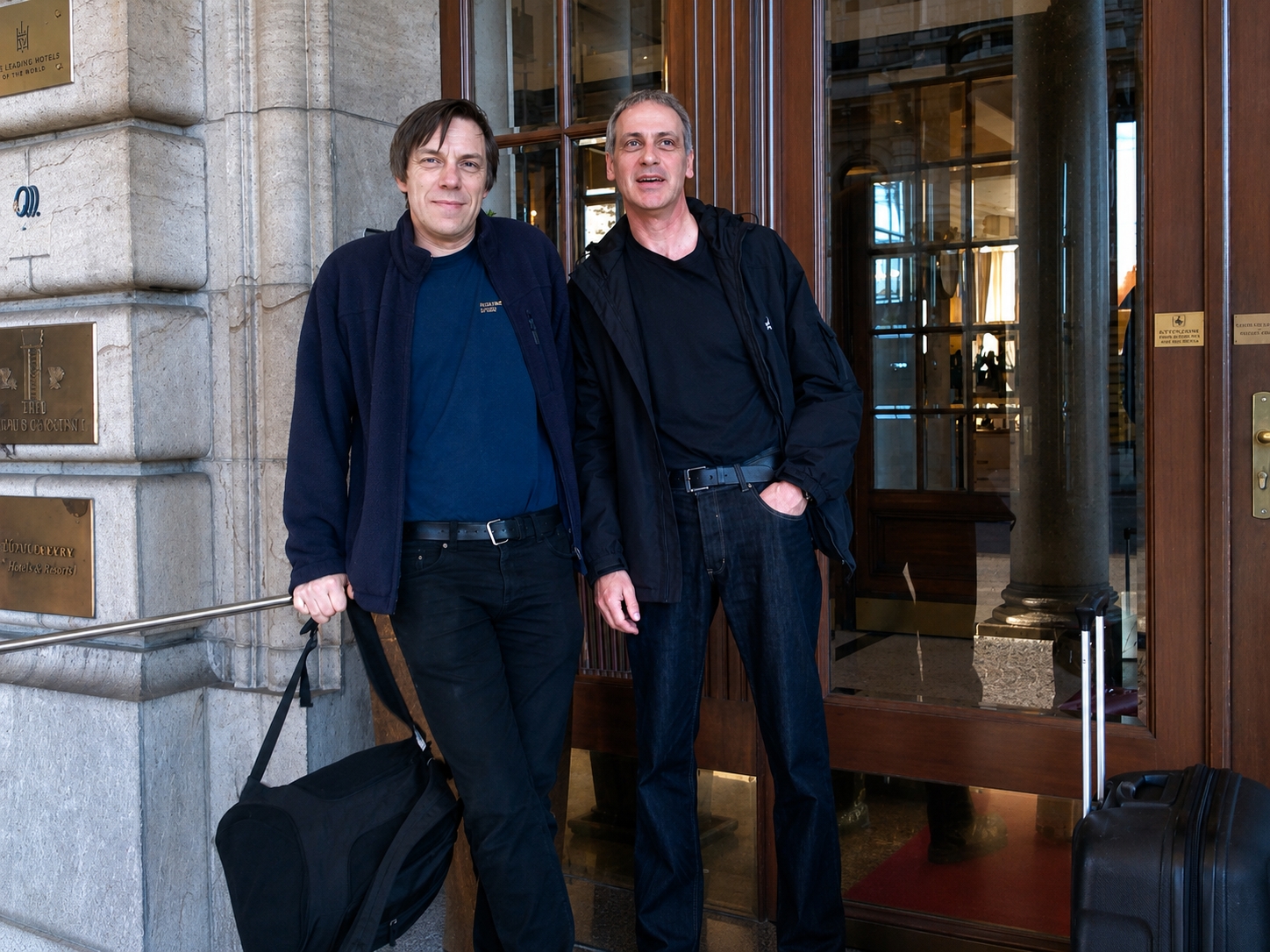
Guy Cresswell specified and supplied the audiovisual equipment for these events. Working alongside my colleague Mike Ramsay, I coordinated with venue teams and local suppliers, prepared the presentation systems, supervised the room installations and oversaw the technical delivery throughout each event.
Working across different European hotels required careful preparation. Every venue had its own room layouts, access arrangements, technical restrictions and local working practices, but the standard expected by Open Door Media, Investment Europe and the attending delegates remained consistent.
The Hotel Beau-Rivage Palace in Lausanne became one of the venues I particularly enjoyed returning to. Its combination of historic character, professional event facilities and experienced venue teams made it an excellent setting for high-level fund management meetings.
The events also took me to other important European destinations, including Venice. Delivering the same reliable technical standard in different countries required close coordination with local venue teams and suppliers, as well as a clear understanding of the programme, the room and the expectations of the client.
Schering-Plough Pharmaceuticals
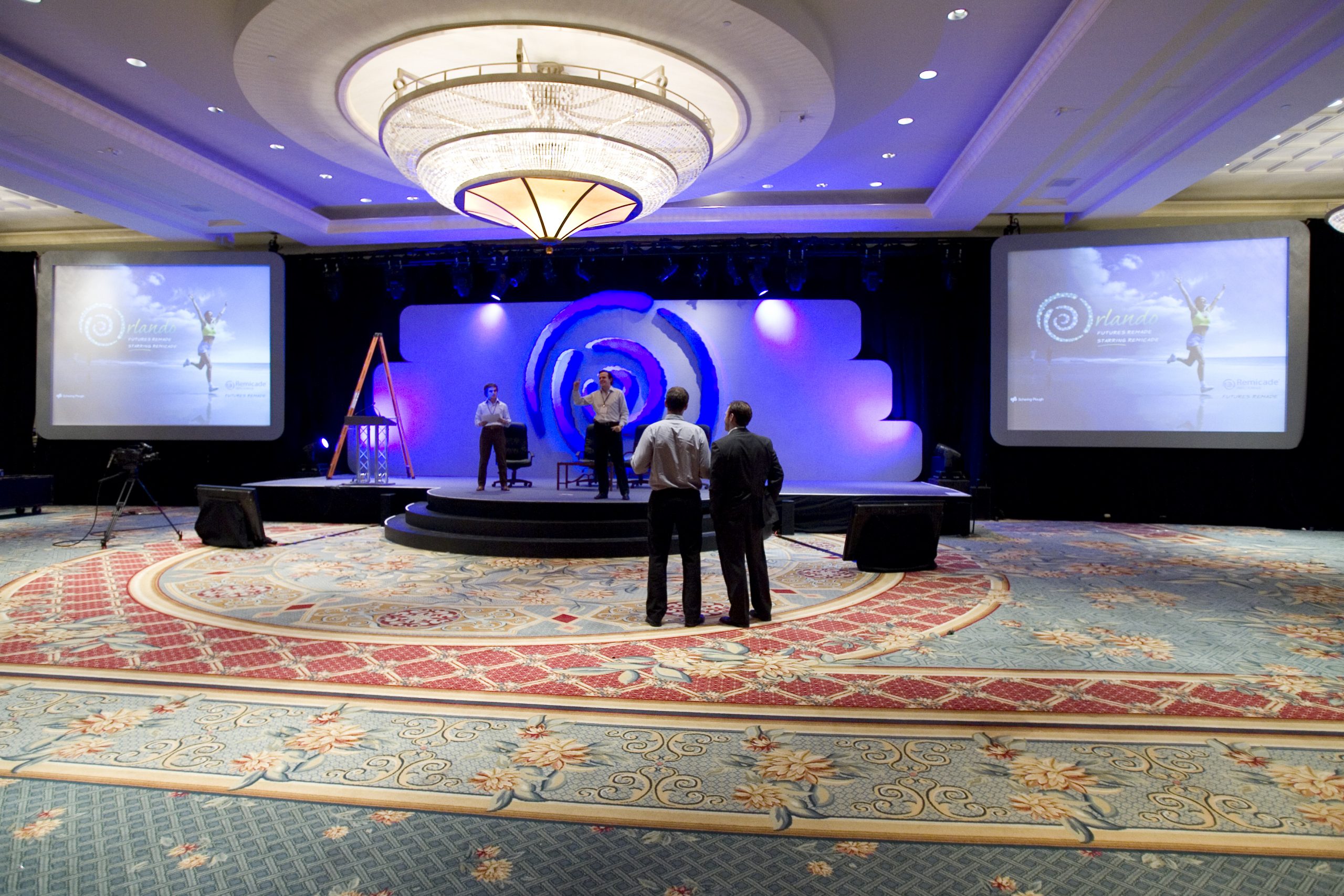
EUCAN Orlando
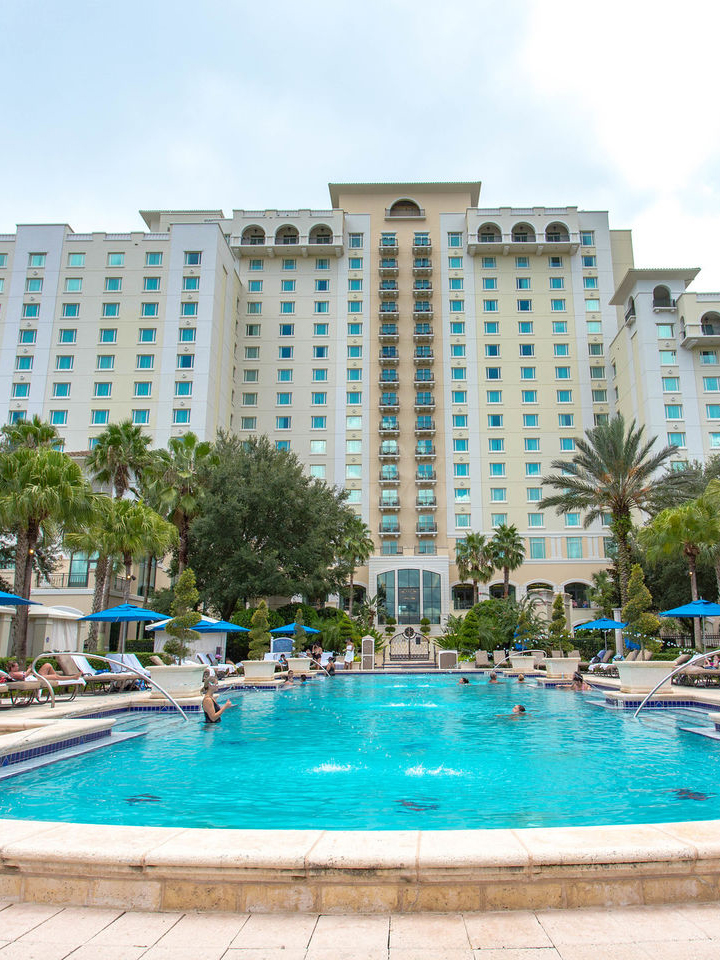
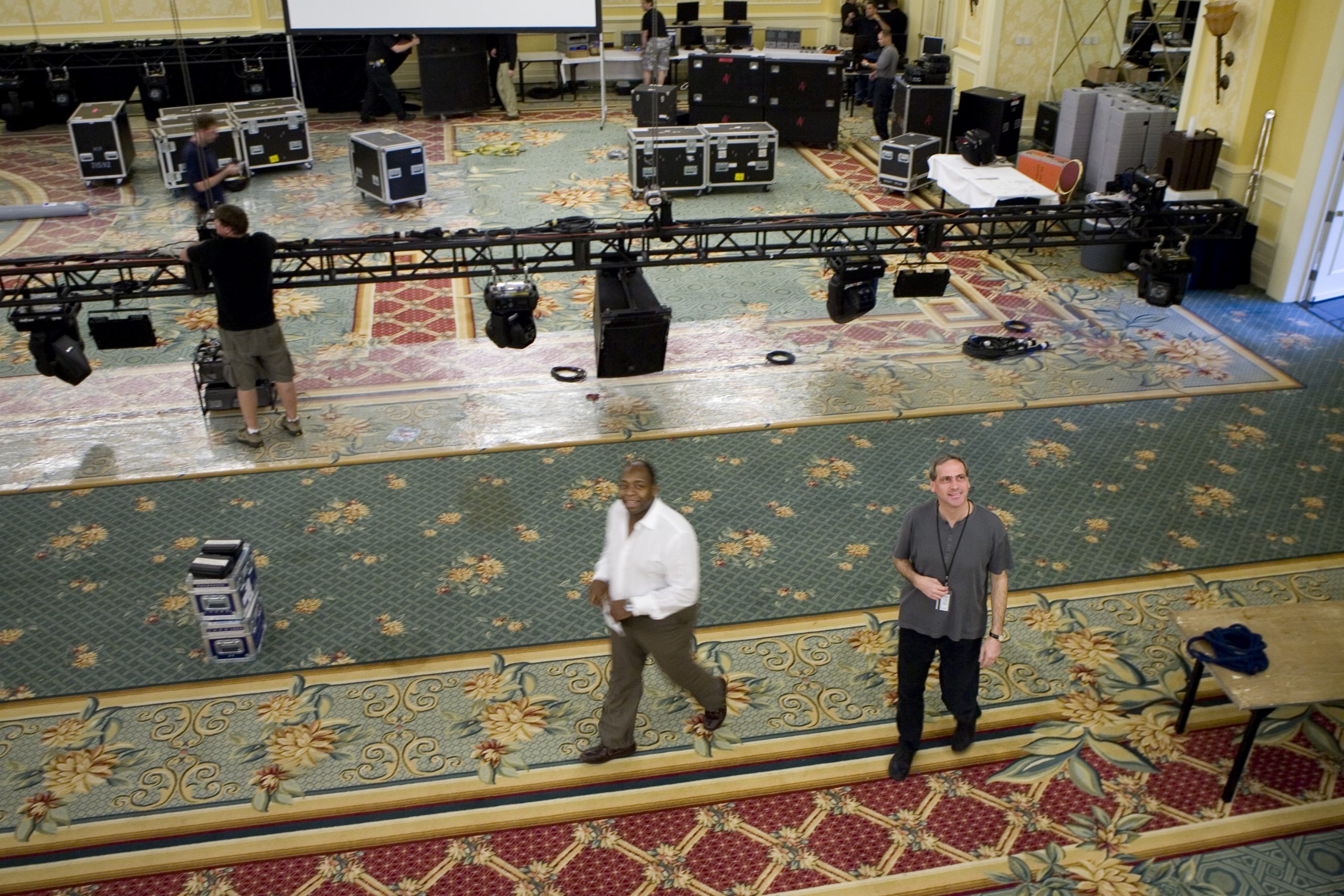
Venue: Omni Orlando Resort at ChampionsGate, Florida
Organisation: Schering-Plough Pharmaceuticals.
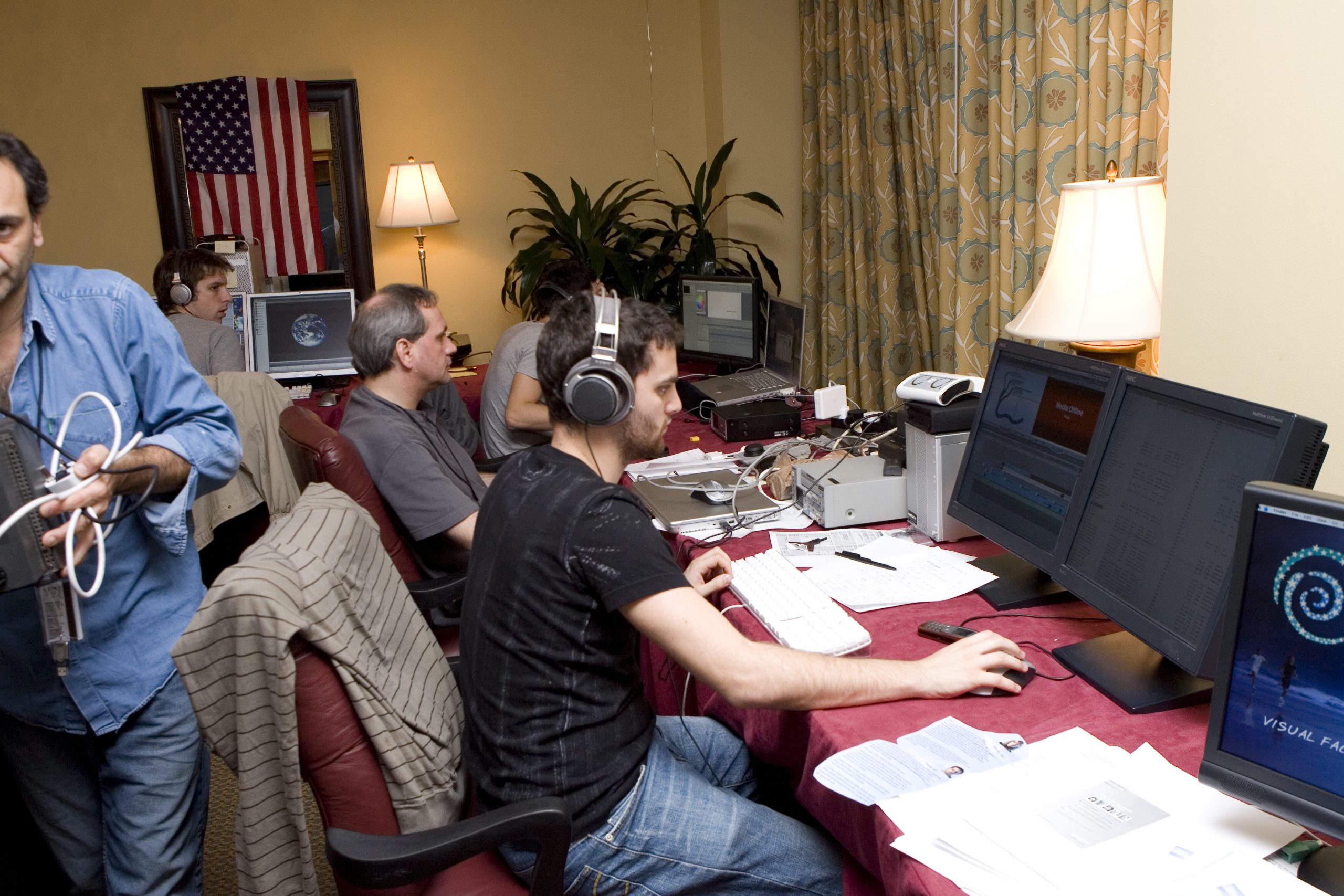
Brief: One main room for seven hundred delegates. Simultaneous translation booths for nine languages. Two large breakout rooms and fifteen smaller breakout rooms. An exhibition with 24 × 50-inch plasma screens.
Film-Making Day
A film-making day gave delegates the opportunity to create a mock advertisement, followed by a “best film” awards ceremony and gala event.
My Role
I worked as the technical manager for CVS International.
I specified all the audiovisual and production equipment required for the event.
Festival of Media
Venues
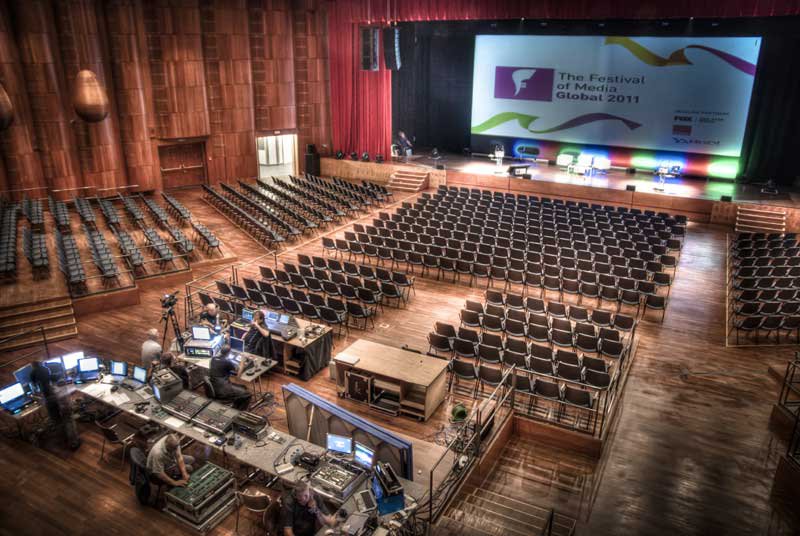
Location: Montreux Convention Centre, Grand-Rue 95, 1820 Montreux, Switzerland.
Location: Rome Cavalieri, Via Alberto Cadlolo, Rome, 00136, Italy.
Location: Fontainebleau, 4441 Collins Avenue, Miami Beach, FL 33140.
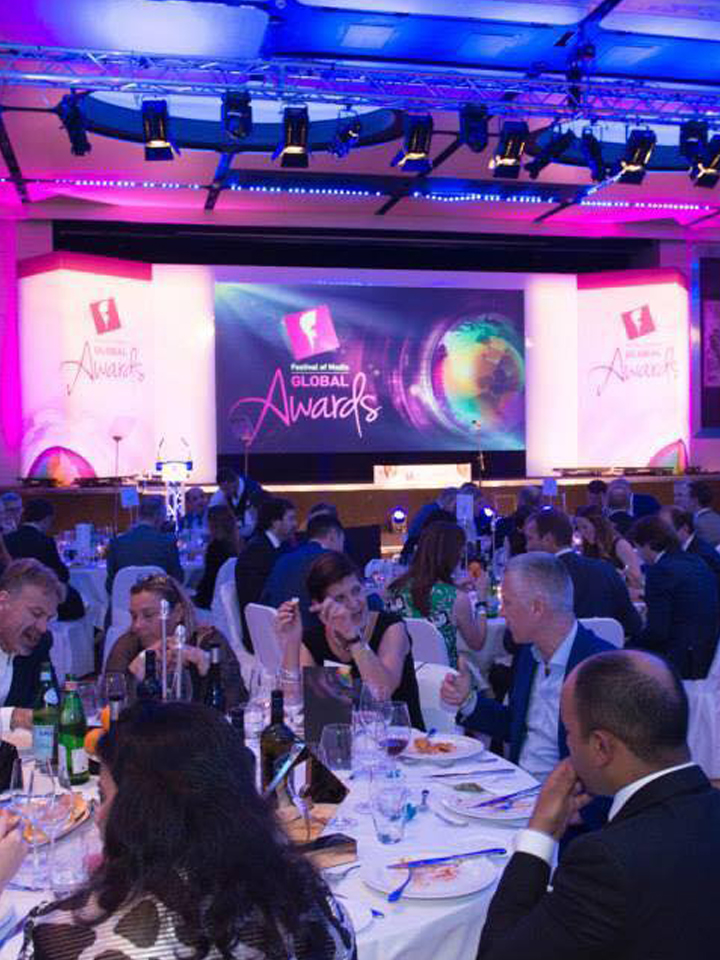
About FOM Awards
Festival of Media Awards programmes have celebrated media and marketing excellence for more than 17 years.
My Role
Working for Promus Productions Ltd.
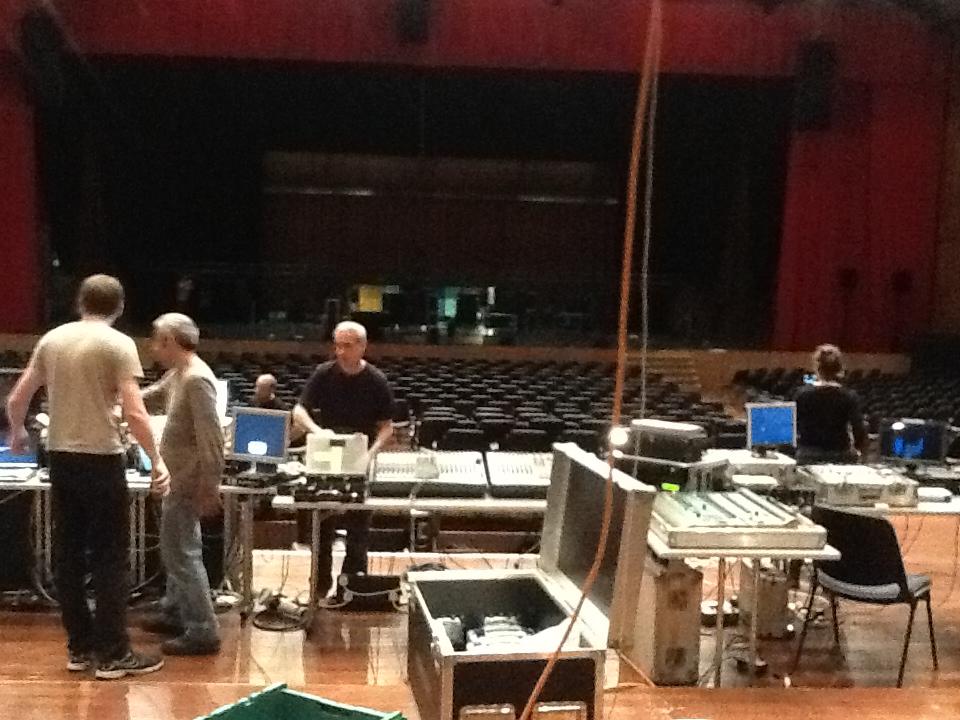
Montreux: Lighting and sound.
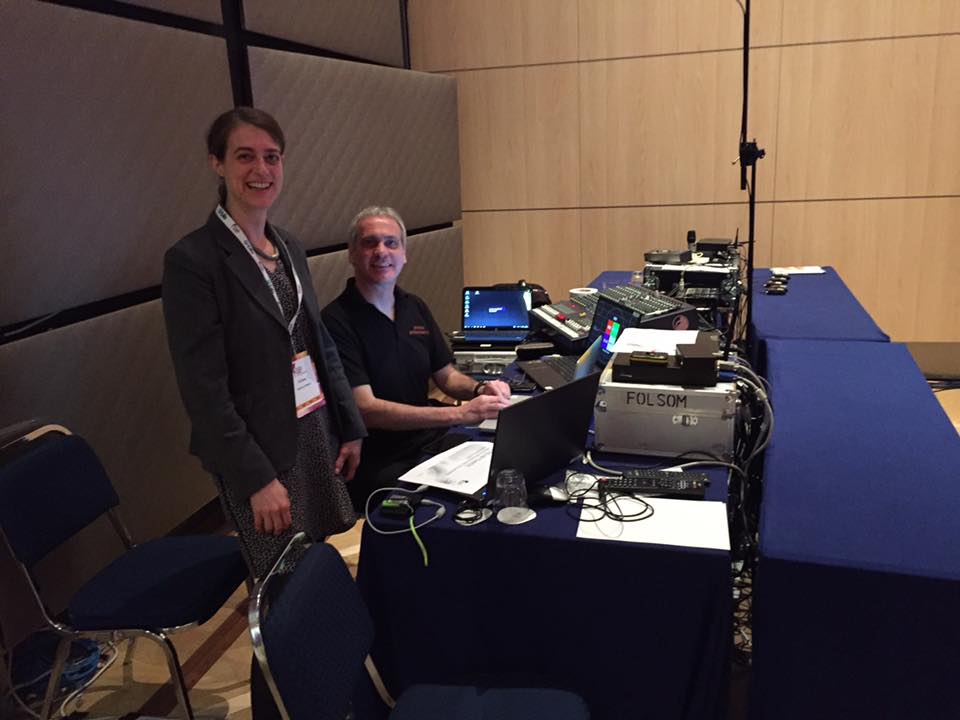
Rome: Breakout room sound and PowerPoint.
(Pictured bottom right)
Miami: Stage manager.
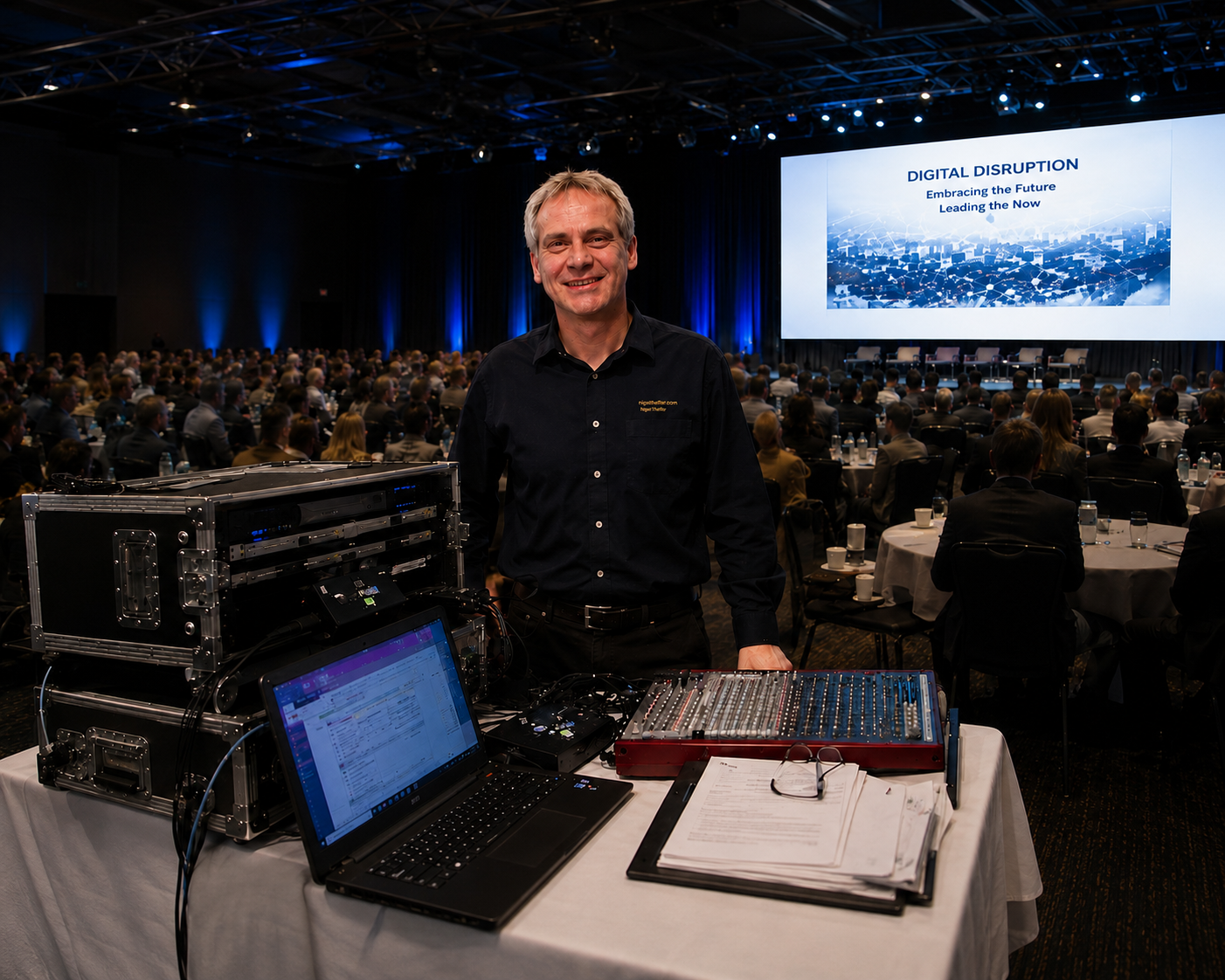
Those early experiences taught me lessons that still apply to modern conferences today: Technology changes.
Pressure does not.
Over the next 35 years, I continued working across European conferences, corporate productions, live events, and technical operations as a sound engineer, technical manager, and production specialist. I watched the industry evolve from analogue slide projection to modern hybrid conferences, live streaming, digital show control, and international corporate productions involving thousands of delegates across Europe.
But despite all the technological changes, one thing remained remarkably consistent, successful events still depend on preparation, calm leadership, operational awareness, and the ability to solve problems under pressure before the audience ever notices they exist.
That is the experience this website is built upon.
You can read more practical lessons in my European conference articles, explore my books shaped by live event experience, or learn more about The European Conference Survival Guide.
For more on my professional background in conferences, live events, technical production, and international work, you can view my profile on LinkedIn .