
Major International Conference Hubs
Manchester — Historic Hotels, Modern Conference Venues and Practical Event Lessons
Manchester conference venues gave me a useful contrast between historic hotels and modern purpose-built event spaces, each with very different implications for technical production.
Like many major conference cities, Manchester offered a mixture of venue styles. Some were grand older hotels full of character but more challenging from a production point of view, while others were modern, purpose-built spaces that made the working day much easier.
That contrast is exactly what stands out in my memories of Manchester. The Midland Hotel was a great venue, but with all the familiar access problems of an older building. Meanwhile, right across the road, the Manchester Conference Centre showed how efficient a venue could be when it had been designed with conferences properly in mind.
Manchester Conference Venues: Old and New
Two Sides of Manchester Event Work
Historic Hotel Versus Purpose-Built Conference Venue
Manchester gave me one of the clearest examples of how venue design affects conference delivery.
On one side, you had the Midland Hotel — elegant, established and full of history, but not always straightforward when moving equipment around the building.
On the other side of the street, you had the ultra-modern Manchester Conference Centre, where the whole environment felt more practical for event crews, delegates and technical production.
Both could host successful events, but the route to getting there was very different.

Historic Manchester Venue
The Midland Hotel
The Midland Hotel was one of the Manchester venues I remember well.
It was a great venue, with the sort of atmosphere and character that older British hotels can bring to an event. From the delegate point of view, those surroundings often add something special to the occasion.
From the production side, however, older hotels nearly always bring extra challenges.
At the Midland, getting the kit around the rooms could be awkward. That is the recurring story with many traditional UK hotel venues: the meeting rooms may be excellent, but the routes for road trunks, sound equipment, screens and control kit were never part of the original building design.
So, as with many older hotels, the key was to allow enough time, know your access routes and accept that the job would probably involve more physical effort than a modern conference venue across the road.
Purpose-Built Practicality
Manchester Conference Centre
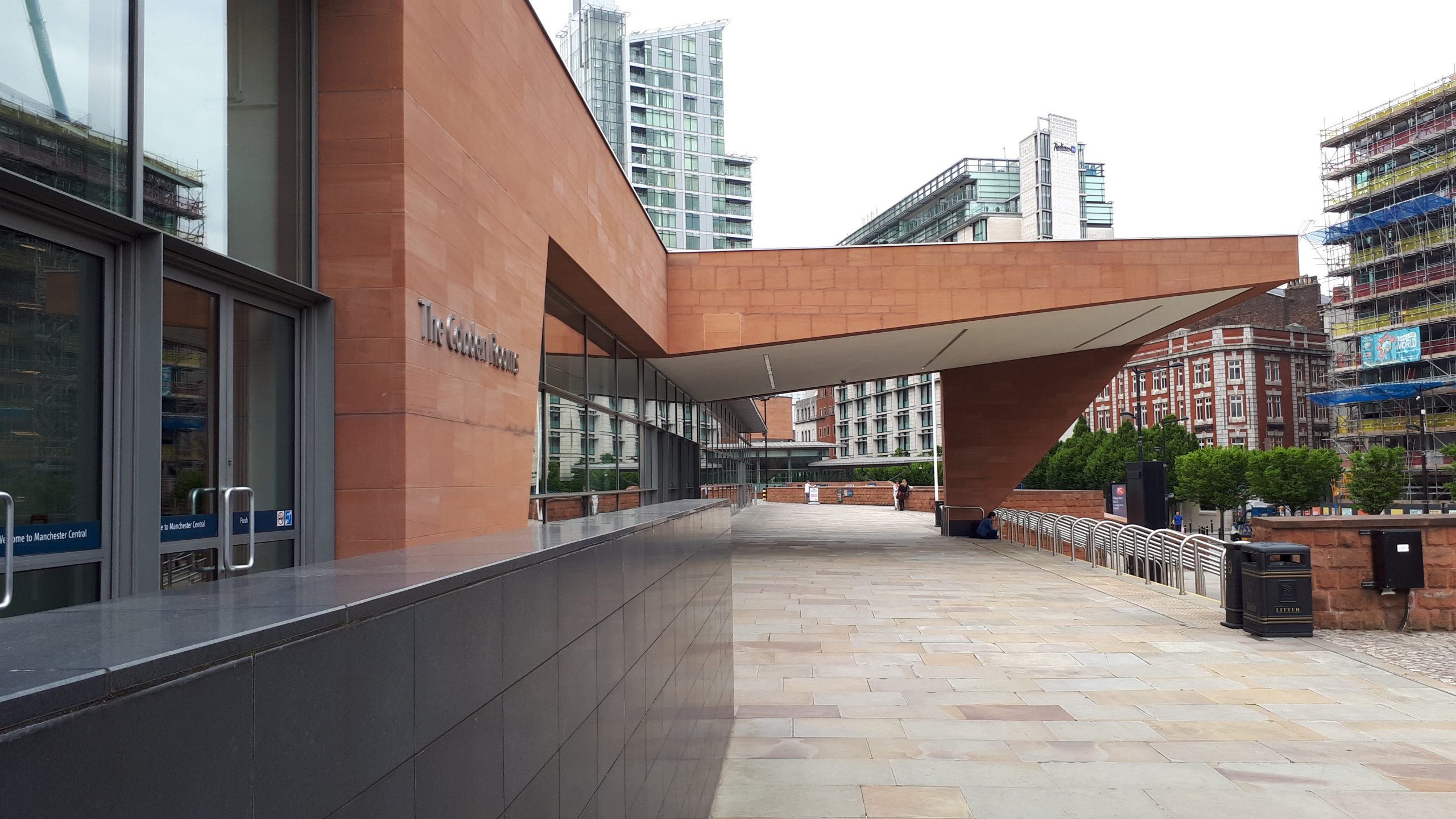
Right across the road from the Midland was the ultra-modern Manchester Conference Centre, and what a contrast it was.
I really enjoyed working there because it felt like a venue built for the realities of conference delivery rather than adapted to them later.
That difference matters. When a venue is purpose-built, the circulation space, the room access, the delegate flow and the technical setup all tend to work more naturally.
For a production crew, that usually means a smoother get-in, clearer working areas and fewer of the awkward compromises you often encounter in historic hotel venues.
It was one of those places where you could concentrate more on delivering the event itself and less on battling the building.
The Reality Behind the Conference
The Kit Still Has to Get There
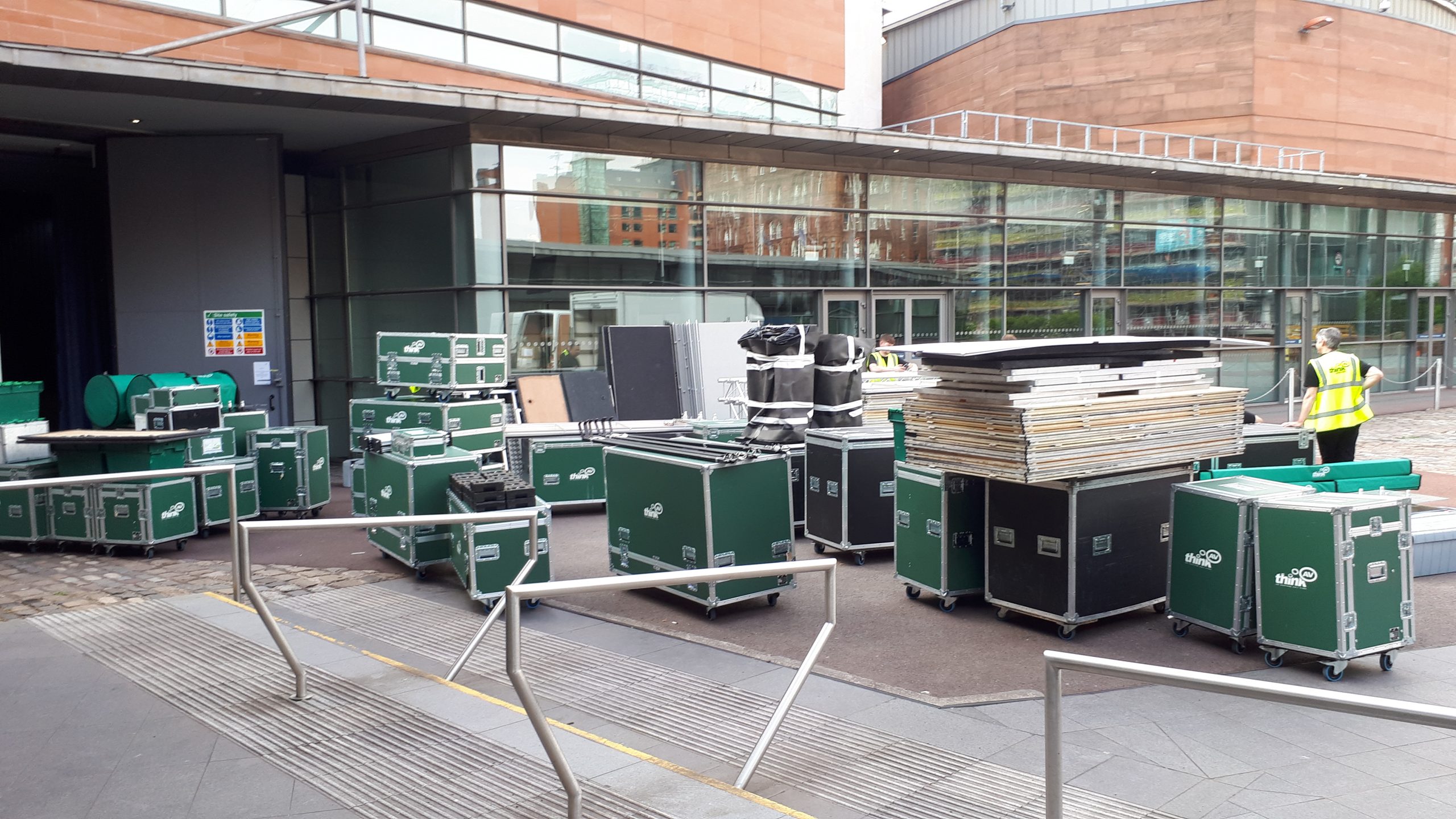
Conference venues are often judged by the ballroom, the breakout rooms or the hospitality spaces, but from the crew’s point of view the event begins much earlier.
The real question is always how the equipment gets into the building, how it is distributed between the rooms and whether the venue layout works with you or against you.
The photograph of the kit is a reminder of what conference production actually involves behind the scenes: road trunks, control equipment, cabling, sound systems and all the practical infrastructure that delegates may never notice unless something goes wrong.
That is why I always say the quality of the room and the quality of the get-in are not the same thing.
A Real Conference Moment
When the Chairperson Told Us to Turn Off the Microphones
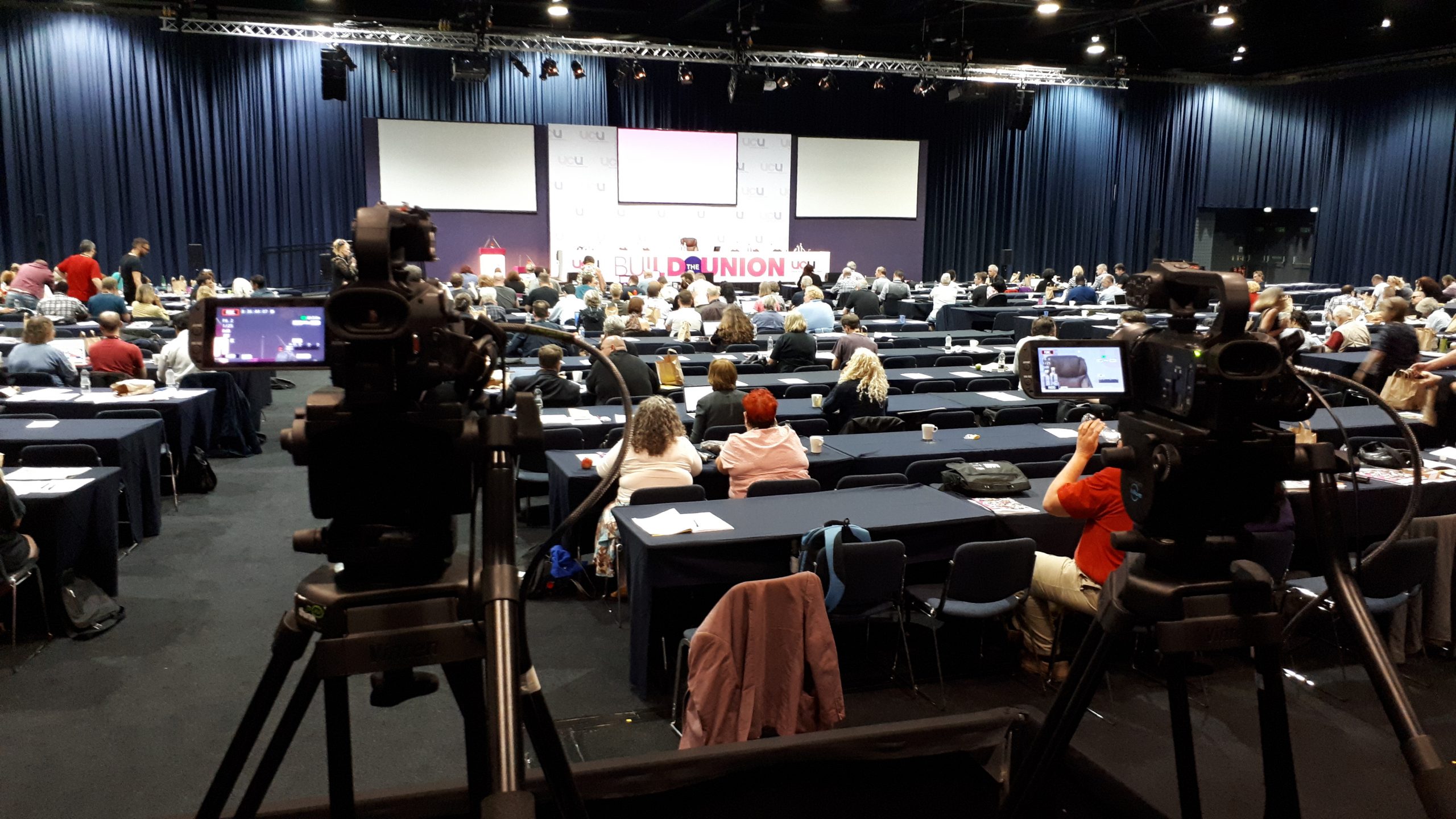
One Manchester union event produced a moment that the crew did not forget in a hurry.
The subject matter under discussion was clearly not going down well with some of the delegates, and tensions in the room were rising.
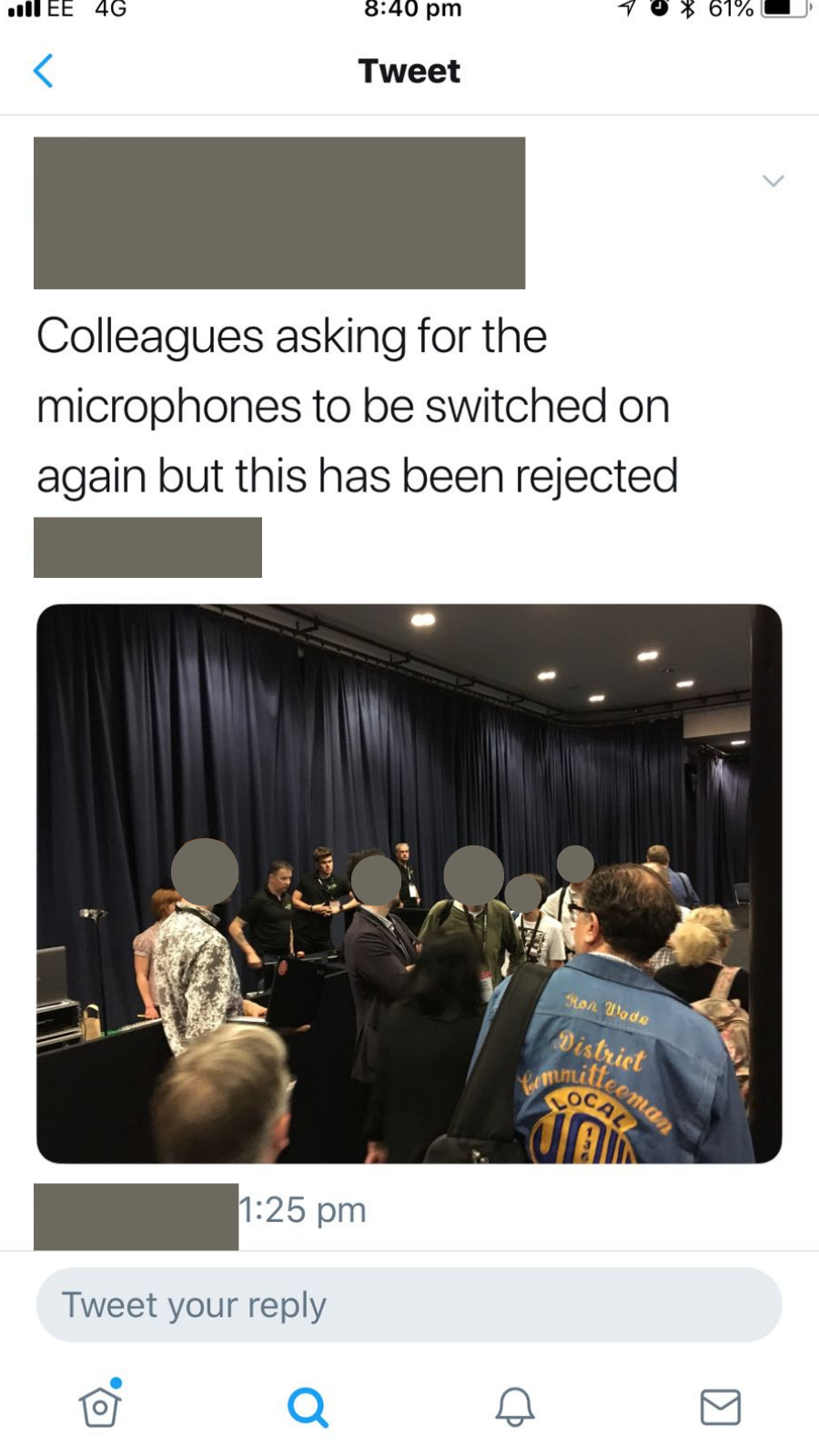
At one point, the chairperson instructed the crew to turn off the microphones.
That decision did not go down well with some of the delegates at all.
It was one of those awkward situations where the technical crew suddenly becomes caught between event authority, live audience reaction and the practical reality of operating the room. You can see us at the back, trying to work out exactly what the best course of action should be.
Live Event Lesson
The crew can control the equipment, but we should never be left to carry the responsibility for political or chairing decisions inside the room.
When tensions rise, lines of authority need to be clear before the session starts.
Conference Planning Lessons
What Manchester Taught Me About Event Venues
Manchester reinforced a lesson I had learned in many other cities: the venue itself can either make an event easier or make every stage of the production more difficult.
The Midland Hotel reminded me that historic venues may be elegant and memorable, but they often require patience, physical effort and careful planning when equipment has to move through the building.
The Manchester Conference Centre showed the opposite. A purpose-built venue can remove many of those obstacles and allow the crew to focus on the event rather than the access problems.
And the union-event microphone incident was a reminder that technical production is never just about cables and sound desks. Conferences are live human environments, and once the room becomes tense, the crew needs clear leadership and decision-making.
A Strong UK Conference City
Manchester as a Major Conference Hub
Manchester deserves its place alongside London, Paris and Berlin in this section because it is a serious conference city in its own right.
It combines strong transport links, a good range of venues and the ability to host everything from hotel-based conferences to larger modern events.
It also reflects something I saw repeatedly across the UK: the best event experience often comes from understanding not just the destination, but the building, the equipment route, the room politics and the practical working reality behind the scenes.
That is why Manchester remains a city I remember positively — practical, capable and full of useful lessons.
Practical Lessons from Real Events
Planning a Conference in the UK or Europe?
The European Conference Survival Guide brings together practical lessons from decades of international conference production, including venue selection, technical access, audiovisual systems, logistics, suppliers and the realities of working across European conference cities.