
A conference does not have the luxury of being late.
In many industries, a delayed project can be moved by a few days, an apology sent to the client and a new deadline agreed. Events are different. If five hundred delegates are due to walk through the doors of a conference venue in Madrid, Berlin, Paris or Stockholm at 9.00 am on Tuesday morning, the event has to be ready.
The stage cannot still be under construction. The microphones cannot still be in their cases. The registration system cannot still be being tested.
At that moment, there are really only two possibilities:
Ready or not ready.
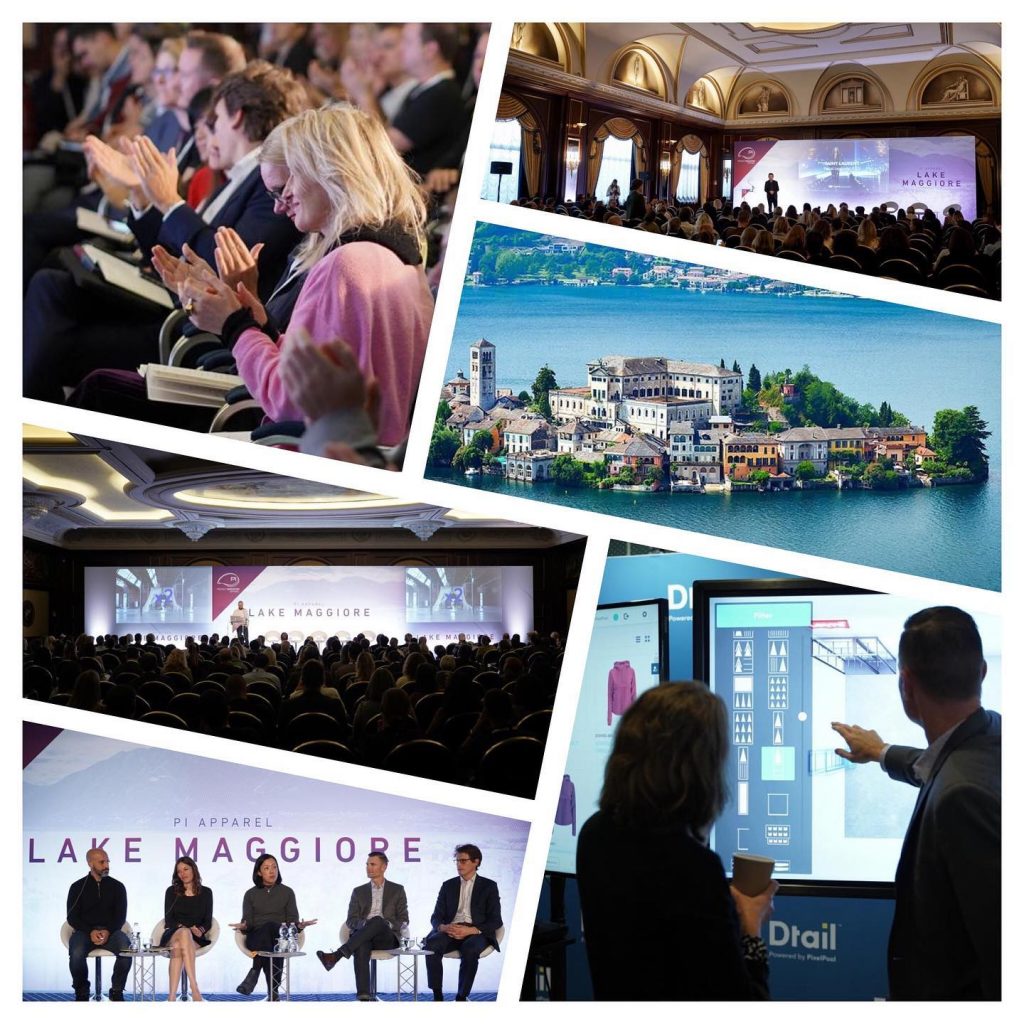
Lake Maggiore, Italy 2019 – Working with Think AV on this Production.
During my years working on conferences and events across Europe, one of the most important lessons I learnt was that a good event timeline is not simply a list of things that need doing. It is an operational plan built around dependencies, deadlines and points of no return.
And the most effective way to create one is to work backwards.
Stop Planning Forwards
A common way to start planning an event is to look at today’s date and begin creating a list:
Book the venue.
Find suppliers.
Confirm speakers.
Organise audiovisual equipment.
Arrange catering.
Produce delegate materials.
Ship equipment.
Build the stage.
Rehearse.
Open the doors.
It looks perfectly reasonable.
The problem is that it hides the relationships between those tasks. A speaker rehearsal cannot happen until the stage and audiovisual systems are operational. The AV systems cannot be completed until the equipment has arrived. The equipment cannot arrive unless transport has been booked.
Transport cannot necessarily be booked until the final technical specification has been agreed. And that specification may depend on the presentation format, speaker requirements and final room layout.
Suddenly, something that looked like one item on a checklist becomes a chain of ten different decisions.
That is why I prefer to work backwards from one immovable moment:
Doors Open.
If delegates arrive at 9.00 am on Wednesday, when must the room be completely ready?
Ideally, not at 8.45 am.
You may want the finished room available the evening before for technical checks, rehearsals and final adjustments.
That immediately changes the schedule.
If rehearsals begin Tuesday afternoon, the technical installation might need to be completed by midday.
If the technical installation takes a full day, the equipment may need to arrive Monday morning.
If equipment is travelling internationally, it may need to leave your warehouse several days earlier.
Continue working backwards, and you eventually discover the real dates that matter.
These are often much earlier than people expect.
Find Your Real Decision Deadlines
One of the greatest dangers in event planning is confusing an event deadline with a decision deadline. Suppose your conference takes place twelve weeks from today. Twelve weeks sounds comfortable. But perhaps equipment must leave the UK five days before installation. The equipment specification therefore needs to be confirmed before packing. Your production supplier needs several days to prepare that equipment.
Before that, you need a final room design. Before the room design can be approved, you need accurate delegate numbers and staging requirements. And before the staging requirements are finalised, somebody needs to decide exactly what is happening during each session.
Your twelve-week deadline can rapidly turn into a two-week decision window.
That is why I recommend identifying Points of No Return.
These are dates beyond which changing something becomes expensive, difficult or operationally dangerous.
Examples might include:
- venue cancellation dates
- hotel room release dates
- freight collection deadlines
- print deadlines
- catering guarantee dates
- stage design approval
- final equipment orders
- speaker presentation deadlines
- technical drawing approval.
Put these dates into the master schedule first.
They are often more important than the event date itself.
Build a 12-6-3-1 Event Framework
For larger conferences, a useful way to structure the planning process is what I call the 12-6-3-1 framework.
The precise dates will vary depending on the event, but the principle is straightforward.
12 months out: establish the foundations
For major European conferences, venue availability can dictate everything.
At this stage, establish:
- the purpose of the event
- approximate delegate numbers
- destination
- preferred dates
- venue requirements
- initial budget
- major accommodation requirements.
Check what else is happening in the destination.
A major exhibition, congress, sporting event or festival can dramatically affect hotel availability, transport and supplier costs. The objective at this stage is not detailed production planning. It is to secure the foundations upon which everything else will be built.
Six months out: build the structure
By around six months, the event should begin moving from concept into operational planning. Major suppliers should be identified, and contracts agreed.
This may include:
- audiovisual production
- staging
- lighting
- interpretation
- registration
- transport
- exhibition contractors
- catering
- entertainment
- local production support.
This is also the point where international events require particular attention to the calendar. A six-month timeline on paper is not always six months of productive working time. European holidays can remove entire weeks from your schedule.
Three months out: lock the content
This is often where pressure begins increasing rapidly. Marketing wants to promote the programme. Speakers are being confirmed. The production team wants final stage dimensions. Catering wants numbers. The venue wants floor plans. Everyone starts asking for information that somebody else has not yet provided. This is where separate areas of planning can begin colliding.
By approximately three months out, you should be working towards confirming:
- the programme structure
- speaker list
- session formats
- technical requirements
- room layouts
- branding requirements
- major production elements.
Do not assume every speaker will arrive exactly as planned. People cancel. Flights are delayed. Presentations change. Build alternatives into the programme wherever possible.
One month out: enter the Dead Zone
The final month before a substantial conference should not be a period of creative reinvention.
I call this the Dead Zone.
It means:
No unnecessary strategic changes.
It is not the time to redesign the stage because somebody has seen an interesting photograph. It is not the time to introduce another major presentation format. It is certainly not the time to add something complicated simply because a senior executive has had an idea.
The final weeks should be dominated by execution.
Confirm.
Check.
Test.
Reconfirm.
The closer you get to the event, the more expensive every change becomes.
Create a Separate Technical Production Schedule
One mistake I have repeatedly seen is trying to combine the delegate programme and technical production schedule into one document. They serve different purposes.
The delegate programme might say:
09.00 Registration
10.00 Opening Session
11.00 Coffee
11.30 Plenary Session
The technical production schedule starts long before any of that happens.
Perhaps:
Sunday 14.00 – Freight arrives
Sunday 15.00 – Room cleared
Sunday 16.00 – Rigging begins
Sunday 18.00 – Truss flown
Monday 07.00 – Stage build
Monday 09.00 – AV equipment installation
Monday 14.00 – Lighting focus
Monday 17.00 – System test
Tuesday 09.00 – Presentation checks
Tuesday 14.00 – Speaker rehearsals
Tuesday 18.00 – Final technical rehearsal.
Technical production is heavily dependent on sequence. You cannot focus lighting before the lighting fixtures are installed. You cannot install suspended equipment until rigging is complete. You cannot always rig while other contractors are filling the room with furniture. One team can easily delay five others. That is why production managers look closely at dependencies rather than simply durations.
Allow Time for the Things Nobody Sees
Some of the most dangerous hours in an event schedule are invisible on the original plan. Consider loading equipment into a hotel ballroom. Someone may assume:
“Truck arrives at 8.00. Installation begins at 8.30.”
But what if the loading bay is shared?
What if crates have to travel through a service corridor?
What if the equipment lift is small?
What if the venue only allows certain areas to be accessed with a staff escort?
What if catering is simultaneously trying to bring tables into the same room?
A two-hour installation can be preceded by three hours of logistics. These are the hidden hours that experienced event teams learn to include. And once a system is installed, allow testing time.
I have always valued having a period where the room is complete, and nothing is happening.
The equipment is running.
The microphones are tested.
Presentations are loaded.
Lighting states are programmed.
And the technical team has time to look, listen and identify problems before delegates or speakers arrive. That quiet time can be extremely valuable.
Respect the European Calendar
Planning conferences across Europe also means understanding that the business calendar is not identical everywhere. August is the classic example. If you are organising a September event, your final preparation period may fall directly across the summer holiday season. Suppliers may have reduced staffing. Key contacts may be unavailable. Local authorities may respond more slowly. Production workshops may close.
Similar issues occur around Christmas, Easter, national holidays and local holidays. A deadline that says “Friday” is meaningless if the company you need has been closed since Wednesday and does not reopen until Monday. This is one reason local suppliers and venue contacts can be so valuable. They understand the working rhythm of their city. Do not try to force a London timetable onto every destination. Build the reality of the destination into the schedule.
Use the Timeline to Force Decisions
A strong event timeline is also a management tool. If a stakeholder keeps delaying a decision, do not simply send another message saying: “Please approve this urgently.” Show them the consequence.
For example:
“If we approve the staging this Friday, production can begin as planned. If approval moves into next week, we will require expedited production and the supplier cannot guarantee delivery.”
Or:
“The venue cancellation charge increases at the 60-day point. We therefore need a decision before Thursday.”
That changes the conversation. You are no longer chasing someone. You are presenting a business decision with a measurable consequence. This is especially important where delayed decisions affect budgets. Every event has moments where flexibility disappears. Good planners identify those moments early.
Build Your Timeline on History, Not Hope
Perhaps the most important question to ask when reviewing an event timeline is:
Does this plan require everything to go perfectly?
If the answer is yes, the timeline is too tight. Speakers will send presentations late. Deliveries will occasionally be delayed. Someone will misunderstand an instruction. A supplier will need clarification. A room will not be available at exactly the time expected. None of this means the event has been badly planned. The mistake is pretending those things never happen. A professional timeline contains contingency.
If something should take two days, do not automatically give it exactly two days when the entire programme depends upon it.
Protect the critical path.
Start With Doors Open and Work Backwards
Take the opening time of your next conference and write it at the bottom of a page.
Then ask:
What must happen immediately before this?
Then:
What must happen before that?
Keep moving backwards. Eventually you will reach today. You may discover that some decisions need to be made much sooner than expected. That is precisely the point of the exercise. Finding out now gives you options. Finding out 48 hours before the event gives you problems.
A conference is effectively a structure built from hundreds of interconnected deadlines. Manage those deadlines properly, and the event has a strong foundation. Ignore them, and small delays can rapidly become operational failures. The objective is not to create a beautiful project plan. It is to create a timeline that still works when real life gets in the way.
More Practical Conference Planning Advice
This article is based on ideas explored in Chapter 5: Building a Practical Event Planning Timeline from The European Conference Survival Guide.
The book draws on practical lessons from conference and live-event delivery, covering venue selection, budgets, suppliers, technical production, planning mistakes, timelines and the operational decisions that can determine whether an event succeeds.
Discover The European Conference Survival Guide and learn how to plan European conferences with fewer surprises, better decisions and more realistic operational control. – Enter your email below, and I’ll send you the PDF.