
Building a Realistic Conference Budget: Why the Cheapest Quote Can Become the Most Expensive Mistake
Conference Budget Planning Starts Before the Spreadsheet
European conference budgets rarely fail because someone forgot the high, obvious costs.
Most planners remember the venue. They remember flights. They remember catering. They remember speakers, hotels, staging, printed materials and maybe the evening dinner.
The real damage usually comes from the costs that were never properly visible at the beginning.
These are the quiet costs hidden inside European venues, supplier contracts, technical requirements, labour rules, tax systems and currency movements. They do not always appear on the first proposal. They often emerge later, once the venue is booked, the date is fixed, the speakers are announced, and the organiser has very little room left to negotiate.
That is why a realistic conference budget is not just a spreadsheet. It is a risk-management tool.

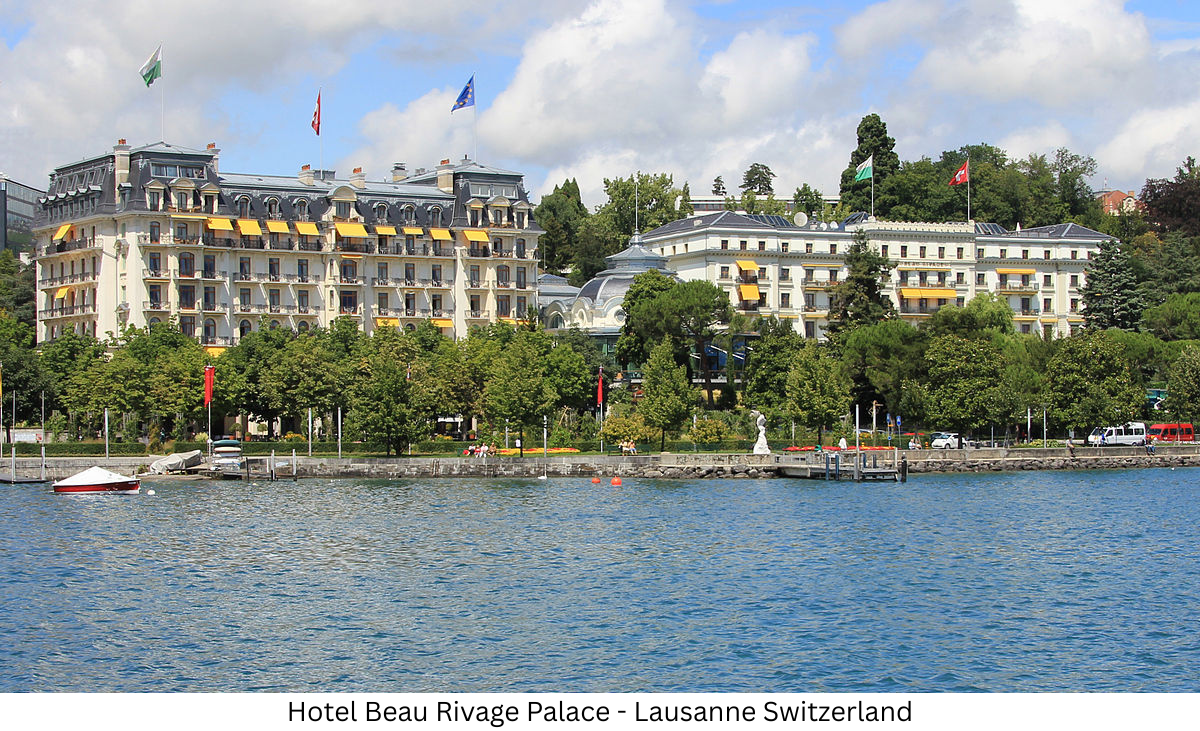
Hotel Beau Rivage Palace 2016
Inside the Salle Sandoz at the Hotel Beau-Rivage Palace in Lausanne — one of my favourite European venues. I’ve worked here more than ten times, and it still feels special: elegant, calm, beautifully run, and full of the kind of atmosphere that makes a conference feel genuinely memorable.
Hotel Beau Rivage Palace Website
This article is adapted from Chapter 3, “Building a Realistic Conference Budget,” from The European Conference Survival Guide
The problem with hope-based budgeting
A hope-based budget is the one that looks good in the early planning meeting.
It usually starts with a simple assumption:
“The venue has quoted us £X, the flights should cost around £Y, and catering is included, so we should be fine.”
This kind of budget is attractive because it gives everyone a number they want to believe. It helps the project feel under control. It allows senior management to approve the event quickly. It also makes the organiser look efficient, at least at the beginning.
The problem is that European conferences do not operate on headline prices alone.
A hotel in Paris, Madrid, Berlin, Amsterdam or Milan may give you a day delegate rate that appears to include everything. But “everything” often means everything from the venue’s point of view, not everything from yours.
You may still need to pay extra for high-density Wi-Fi, stage power, AV labour, translation booths, branded lecterns, rigging, room resets, late access, storage, security, coat-check staff, rehearsal time or overtime.
The first quote is rarely the full truth.
A realistic budget starts by assuming that the quote is incomplete until you have proved otherwise.
The cheapest quote may simply be unfinished
One of the most dangerous mistakes in conference planning is comparing two venue quotes only by the number at the bottom of the page.
A £50,000 quote may look better than a £65,000 quote. But if the cheaper quote excludes VAT, reliable Wi-Fi, technical labour, speaker rehearsal time and room turnaround costs, it is not cheaper. It is simply unfinished.
The more expensive quote may actually be the more honest one.
This is where inexperienced planners get trapped. They present the lowest number to management because it looks efficient. Then, as the event approaches, the hidden costs begin to appear.
The venue explains that the “standard Wi-Fi” only supports basic email use, not 400 delegates using event apps, polling tools or software demos.
The AV supplier explains that the stage power is not included.
The hotel explains that the evening room reset requires additional labour.
The catering team explains that coffee after 5pm is charged separately.
The finance team then wants to know why the approved budget has suddenly increased.
At that point, the organiser is no longer managing the budget. They are defending it.
Always budget for the real event, not the imagined one
A conference budget should be built around what the event actually needs to achieve.
There is no point budgeting for a simple meeting if the business is expecting a polished sales conference, a pharmaceutical advisory board, a product launch, a multilingual congress or a leadership event with complex technical requirements.
The first question should not be, “What is the cheapest way to run this?”
The better question is:
“What does this event need in order to work properly?”
If 500 delegates need to use an app at the same time, Wi-Fi is not a minor extra. It is infrastructure.
If speakers are presenting complex data, the screen size, aspect ratio, confidence monitors and rehearsal time matter.
If you are working across languages, interpretation is not something to add later. It affects room layout, technical planning, delegate flow and staffing.
If the CEO is delivering a keynote to international clients, sound quality is not a luxury. It is part of the credibility of the event.
A realistic conference budget protects the purpose of the event.
Build in a 15% contingency
For European conferences, a 5% contingency is often too weak.
A more realistic starting point is a 15% contingency on the total estimated cost.
This is not spare money to spend casually. It is protection against the things that can go wrong despite good planning.
These may include transport strikes, currency changes, additional technical requirements, venue access restrictions, supplier delays, customs issues, last-minute speaker changes, labour overtime, weather disruption or changes to delegate numbers.
The contingency should sit quietly inside the budget. It should not be advertised to suppliers. It should not be treated as available money by internal teams.
It is your “sleep at night” fund.
If you do not need it, you finish under budget. If you do need it, you avoid a crisis.
VAT can distort the whole budget
VAT is one of the most common budget traps in European conference planning.
Many venue and supplier quotes are shown net of VAT. That means the tax has not yet been added.
A venue quote of €100,000 in a country where VAT is 20% does not mean €100,000 will leave your bank account. It may mean €120,000.
Some businesses can reclaim VAT later, but that does not always solve the cash-flow problem. Reclaiming VAT from another country can take time, and your finance department may still need to fund the gross cost first.
For budget approval, you need to be clear about three figures:
The net cost.
The VAT amount.
The gross cost leaving the business.
Never assume that VAT is included. Ask directly. Get the answer in writing. Then build your internal budget around the real cash requirement, not the more attractive net figure.
Understand room hire, DDR and minimum spend
European venues often charge in different ways.
Some charge a room hire fee. You pay for the space, then add catering, AV and other services separately.
Others use a day delegate rate, often called DDR. This may include room hire, tea and coffee, lunch, basic equipment and sometimes limited AV.
Other venues use a minimum spend model. The room may appear to be “free,” but only if you commit to spending a certain amount on food and drink.
None of these models is automatically good or bad. The right option depends on the event.
A DDR may be useful for a straightforward meeting with predictable numbers.
Room hire may be better when you need more control over catering, timings and technical production.
Minimum spend may work for a hospitality-led event, but it can be wasteful for a working conference where delegates do not need elaborate catering.
The mistake is choosing the model that looks cheapest on page one of the proposal.
You need to calculate the total cost of ownership. That means adding the room, food, drinks, AV, Wi-Fi, labour, service charges, tax, access time and all operational extras.
Only then can you compare venues properly.
Technical costs need their own budget line
Technical costs are often underestimated because people outside the production world assume AV means “a screen and a microphone.”
For a professional conference, technical delivery can include sound, lighting, projection, LED screens, speaker timers, comfort monitors, laptops, switchers, cameras, recording, streaming, interpretation systems, stage sets, power distribution, cable management, technicians, rehearsals and show calling.
A venue’s “basic AV package” may be nowhere near enough.
You should ask detailed questions early:
How many microphones are included?
Is there a technician in the room all day?
Is rehearsal time included?
Is stage power included?
Is there a charge for bringing in an external AV supplier?
Does the venue require the use of its in-house supplier?
Is high-density Wi-Fi included or separate?
Are there overtime rates after a certain hour?
These questions are not technical fussiness. They are budget protection.
Labour rules can change the cost of the same event
In many European cities, staffing costs depend heavily on timing.
A load-in on a Sunday may cost far more than a weekday. Late-night rehearsals may trigger overtime. Public holidays may require premium rates. Some venues may have union rules or strict working-time regulations.
This means your agenda can directly affect your budget.
Starting an event on Monday morning may seem logical, but if it requires the whole production team to build the stage on Sunday, it may be expensive.
Moving the event start to Tuesday, or allowing access on Friday or Saturday, could reduce labour costs.
A realistic budget is not just about what you buy. It is about when you need people to do the work.
Time is a cost.
Currency can quietly damage a UK budget
For UK organisers working in Europe, currency movement is another hidden risk.
You may approve a budget in pounds, sign contracts in euros and pay the final invoice months later. If the exchange rate moves against you, the event becomes more expensive even if the supplier has not changed the price.
A €100,000 venue contract may look manageable when the exchange rate is favourable. But by the time the final payment is due, that same euro amount may cost thousands more in pounds.
This is why European conference budgets need a currency buffer.
For larger events, finance teams may consider buying currency in advance or using formal hedging. For smaller events, the practical approach is to include exchange-rate movement inside the contingency.
Do not assume today’s exchange rate will still be there when the final invoice arrives.
Use the budget to manage expectations
A good budget does more than track spending. It educates decision-makers.
Instead of presenting one optimistic number, show the difference between the low-cost version and the real-world version.
For example:
“This is the basic version. It has limited Wi-Fi, reduced AV, no contingency and no allowance for overtime.”
Then show the realistic version:
“This is the version that supports the event we are actually planning, including proper connectivity, technical support, VAT, labour, contingency and currency risk.”
That changes the conversation.
You are no longer asking for more money. You are showing the cost of reducing risk.
Senior stakeholders may still choose the cheaper option, but at least they are making that decision with open eyes.
Final thought: a budget is a foundation, not a ceiling
Too many conference budgets are treated as ceilings.
The organiser is told, “Do not go above this number.”
But a better way to think about a conference budget is as a foundation. If the foundation is weak, everything built on top of it becomes unstable.
A realistic budget gives the event a better chance of success. It protects the organiser from unpleasant surprises. It helps suppliers do their jobs properly. It gives senior management a clearer view of what the event genuinely requires.
Most importantly, it closes the gap between expectation and reality.
That is where successful European conference planning begins.
The European Conference Budget Reality Check – Free Download
10 Hidden Costs to Check Before You Sign the Venue Contract
For more practical guidance on planning European conferences, avoiding venue traps and managing live-event risk, read:
The European Conference Survival Guide
by Nigel T. Heffer
A practical guide for organisers, marketing teams and business leaders planning conferences, meetings and corporate events across Europe.
Planning a conference in Europe? The European Conference Survival Guide explains how to avoid the hidden costs, venue traps, technical problems and planning mistakes that damage international events. Read the full guide before you sign the next venue contract.
This article is part of my wider collection of European conference articles. You may also find it useful to read about common conference planning mistakes or explore The European Conference Survival Guide.